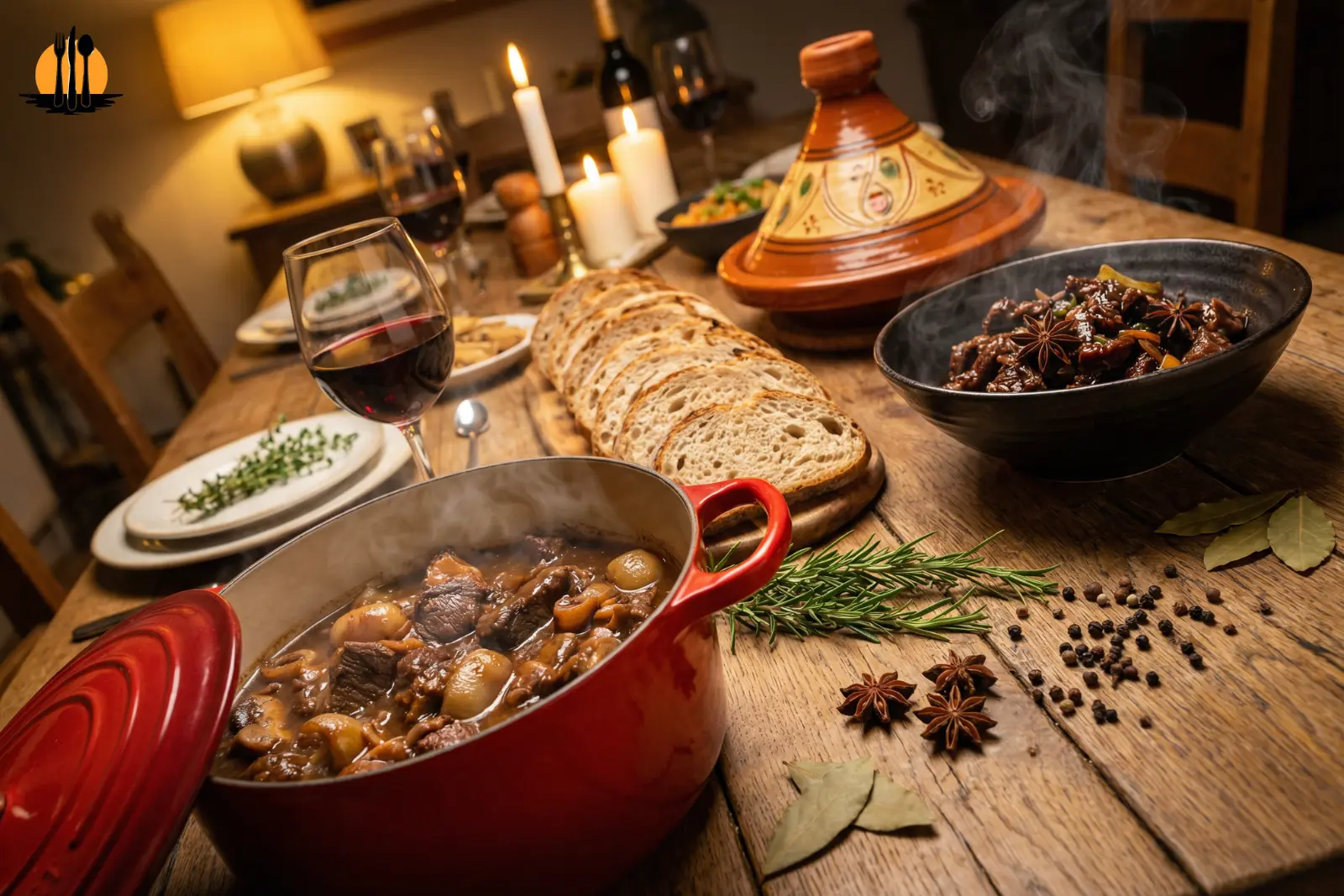
I have spent forty years in professional kitchens, and I can tell you that a pot of stew is the most honest meal you can serve. While the ingredients change from country to country, the philosophy remains the same because we use time to turn tough cuts into love.
If you want to master the technical chemistry behind this magic before we travel the world, I strongly urge you to read my deep dive in beef stew masterclass braising techniques. Now, let me help you choose which flavor profile suits your craving today.
Table of Contents
The French Bourguignon Style
We start our journey in the Old World where the technique is all about reduction and patience. These Traditional Beef Stews focus on deep and glossy sauces built on wine rather than heavy spice blends.
The Wine Reduction Technique
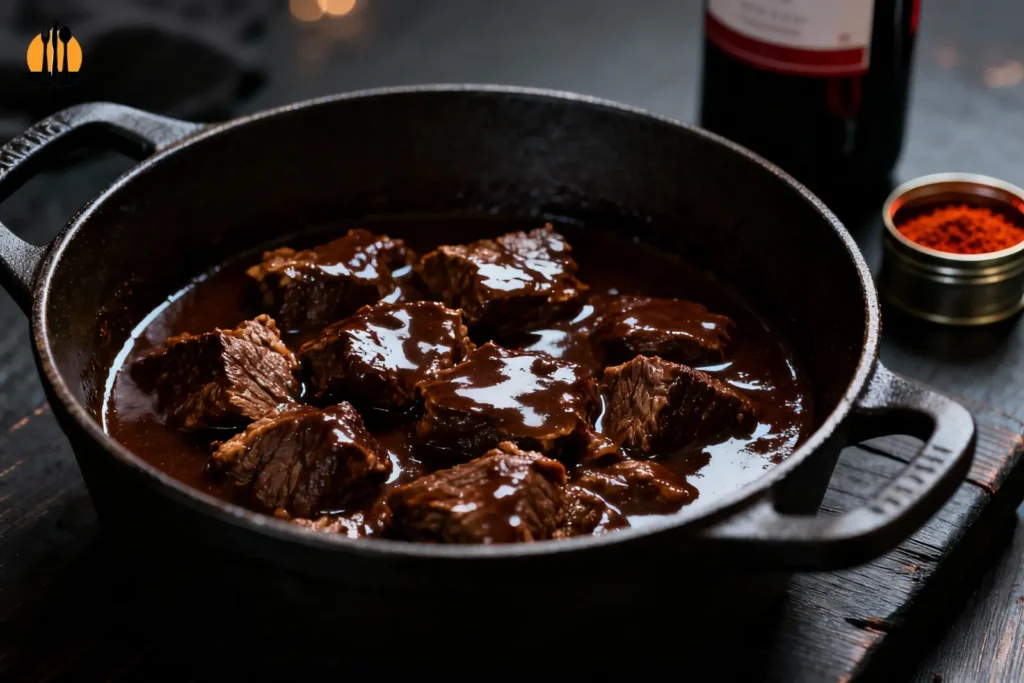
I teach cooks that this is not just a meat dish but a celebration of the sauce itself. The secret is to reduce the Pinot Noir separately before adding it to the pot to remove the raw acidity. This specific technique creates a velvet texture that distinguishes it from other Beef Stew Styles that simply boil the alcohol with the meat.
The Bacon and Onion Foundation
You must render the bacon fat slowly until it is liquid gold before searing your beef cubes in it. I always add the pearl onions and mushrooms near the end so they act as sponges for that winey richness. This attention to layering flavors is what makes French recipes the most elegant of all Beef Stew Styles found in Europe.
The Irish Guinness Style
Ireland knows exactly how to warm you up on a damp day. This dish is the true definition of Global Comfort Food because it uses simple and hearty ingredients to help you survive the cold winters.
Using Stout as the Base
I never use wine here because the magic lies in the dark roasted barley of a good stout. The beer brings a deep bitterness that tenderizes the meat fibers perfectly. This robust profile creates one of the most distinct Beef Stew Styles that relies on malt rather than acidity to balance the richness of the fat.
The Sweetness of Root Vegetables
You need plenty of parsnips and carrots here to act as a natural sweetener against the bitter beer. I always cut them into large chunks so they hold their shape during the long simmer. It is this interplay between earthiness and sweetness that makes Irish cooking stand out among other European Beef Stew Styles you might try.
The Belgian Carbonnade Style
Belgium taught me that sweet and sour is a match made in heaven. We look at these specific Braised Beef Styles to understand how dark ale can be just as noble as fine wine in the kitchen.
The Sweet and Sour Balance
I vividly remember tasting my first Carbonnade in Brussels. The secret is balancing the sharp acidity of vinegar with plenty of brown sugar to create a sticky glaze. This unique interplay makes it one of the most complex Beef Stew Styles despite having so few basic ingredients.
Thickening with Gingerbread
We do not use a flour roux here. I slather spicy mustard onto a slice of gingerbread or rustic bread and lay it right on top of the simmering liquid. It dissolves slowly to thicken the sauce naturally, proving that the best Beef Stew Styles often rely on clever pantry staples rather than fancy techniques.
The Hungarian Goulash Style
Hungary offers a delicious bridge between a thick soup and a hearty main course. These Traditional Beef Stews are defined entirely by the quality of the paprika rather than just the cut of beef.
Blooming the Paprika
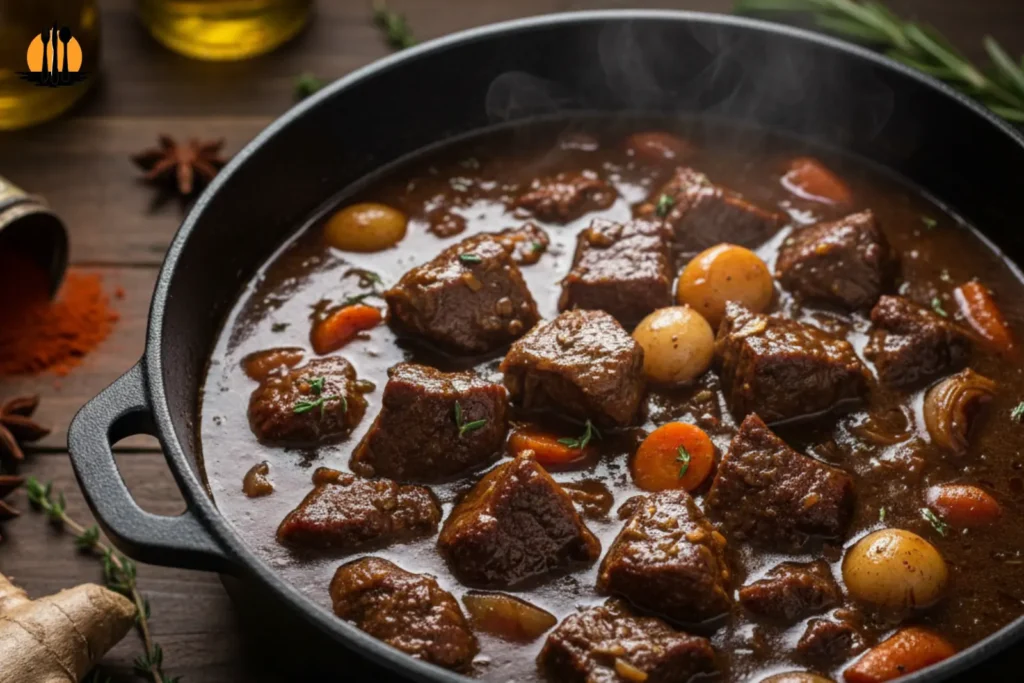
I learned the hard way that you cannot just dump paprika powder into water. You must fry it in hot fat for a few seconds to release its essential oils and vibrant red color. This crucial step is the only way to achieve the aromatic depth found in authentic Hungarian Beef Stew Styles and avoid a gritty texture.
Lard vs. Butter
You should put away the butter and use good quality pork lard to sweat the onions. The distinct savory note of the pork fat cuts right through the natural sweetness of the peppers. It provides a rustic mouthfeel that sets this dish apart from the more refined Beef Stew Styles of Western Europe.
Grandpa’s Health Note: Balancing Tradition
While I love the rich taste of pork lard in a traditional goulash: I often adapt these global recipes to suit my modern nutritional needs. If you are watching your heart health like I am: you should check out my Healthy Beef Stew Guide for cleaner ingredient swaps.
The Old-Fashioned American Sunday Style
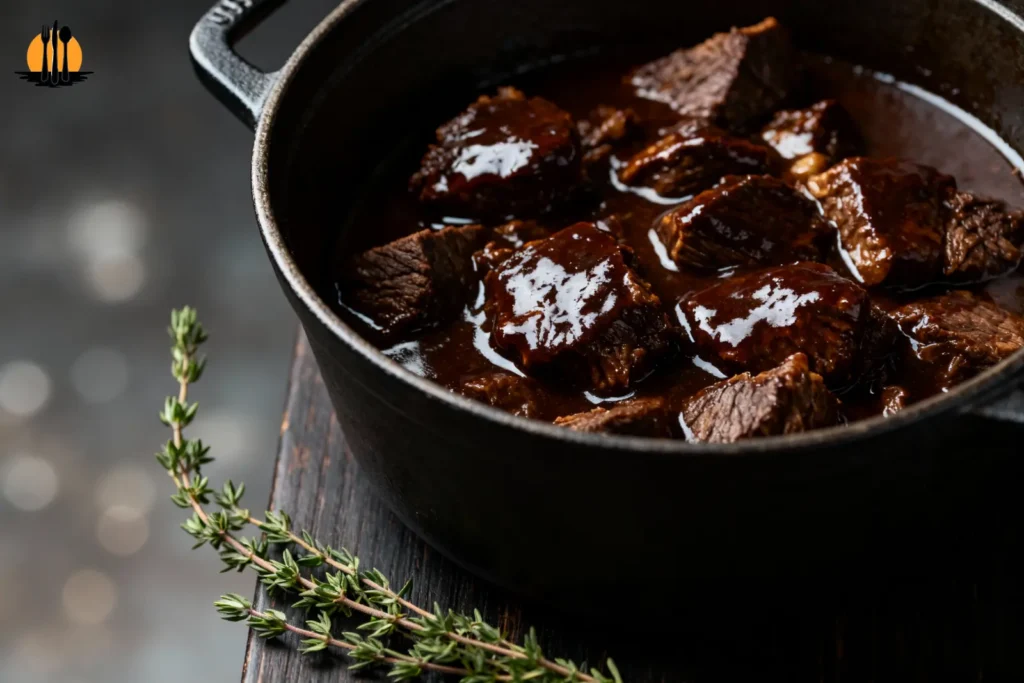
There is nothing quite like the smell of a pot roast simmering on a quiet Sunday afternoon. This dish has earned its place as a staple of Global Comfort Food because it relies on simplicity and high quality ingredients rather than complex techniques.
The Clear Broth Philosophy
We do not mask the flavor of the meat with wine or heavy spices in this version. I focus on creating a crystal clear broth by skimming the impurities constantly as the chuck roast simmers. This purity allows the natural beef flavor to shine brighter than in other Beef Stew Styles that rely heavily on alcohol reductions.
The Art of Large Vegetables
I always chop my carrots and potatoes into large bite sized chunks to prevent them from turning into mush during the long cook. The goal is to have distinct textures where the vegetable yields to the fork but keeps its integrity. It is this rustic and chunky presentation that defines the hearty nature of American Beef Stew Styles compared to more refined European versions.
Grandpa’s Planning Secret: The Sunday Foundation
This American classic is the perfect starting point for your busy week because it stays fresh for days. I always make a double batch on Sundays so I have a reliable base for my office lunches. To see how I organize my whole city life around this pot: take a look at my guide on Beef Stew Meal Planning.
The Texas “No Bean” Chili Style
Texas takes its beef seriously and the rules are strictly enforced here. We examine these spicy Braised Beef Styles to understand why beans are forbidden and meat is king.
The Purity of the Meat
I never use ground meat for a competition bowl of red because it turns into mush. You must hand cut the beef chuck into small uniform cubes to ensure they hold up against the long simmer. This focus on the texture of the meat itself is what separates true Texas chili from other Beef Stew Styles that treat the protein as an afterthought.
Building the Chili Paste
You cannot rely on generic powder from a jar if you want real depth. I always toast dried guajillo and ancho peppers on a hot comal before rehydrating them to make a thick smoky paste. This labor of love creates a complex flavor profile that makes it the boldest of all Beef Stew Styles found in North America.
The Filipino Beef Pares Style
Traveling through Manila introduced me to this sticky and savory masterpiece found on every street corner. Filipino cuisine offers a unique take on Global Comfort Food, and my Perfect Beef Pares Recipe at Home specifically captures this combination of tender meat with a heavy dose of aromatics to wake up the palate
The Star Anise Signature
I love how the strong scent of star anise hits your nose the moment you lift the lid off the pot. You must simmer the whole spices gently to infuse the brisket without making the broth bitter. This distinctive licorice aroma helps it stand out from other Beef Stew Styles that rely mostly on subtle herbs like thyme or bay leaves.
The Soy and Sugar Glaze
The magic lies in reducing the soy sauce and brown sugar until the cooking liquid becomes thick and syrupy. I always braise the meat until it almost falls apart before letting the sauce glaze every single cube. It is significantly sweeter than most Beef Stew Styles but the salty kick of the soy sauce keeps the flavor profile perfectly grounded.
The Beijing Garlic Beef Style
My time in Beijing taught me that garlic is a vegetable here rather than just a simple seasoning. We explore these robust Braised Beef Styles to see how high heat and ginger transform tough shank meat into something incredibly warming.

The Garlic Intensity
I always peel two whole heads of garlic for a single pot because the cloves turn buttery and sweet after an hour of simmering. You must leave the cloves whole to prevent them from burning which creates a depth of flavor that is rare in Western Beef Stew Styles.
The High Heat Sear
The process starts with a smoking hot wok to sear the beef and ginger slices instantly before adding any liquid. This aggressive technique locks in the juices and creates the famous wok hei flavor that defines Chinese cooking among Beef Stew Styles worldwide.
The Japanese Kare Raisu Style
Japan reinvented the curry concept to create a dish that feels like a warm blanket. This is arguably the nation’s favorite Global Comfort Food because it combines the spice of India with the sweetness of French fruit jams.
The Curry Roux Secret
I was surprised to learn that Japanese cooks rely on solid blocks of curry roux made from flour and butter to thicken their pot. This results in a velvety sauce that is much thicker than other Beef Stew Styles and coats the short grain rice perfectly.
Grated Apple and Honey
You might think it sounds strange but I always grate a fresh apple and add a spoon of honey into the simmering liquid. This sweetness balances the spices and creates a mild profile that makes it unique among spicy Beef Stew Styles found in Asia.
The Moroccan Tagine Style
Morocco brings us to the edge of the desert where water is precious and flavors are intense. We explore these Traditional Beef Stews to learn how to cook with steam and spice rather than just boiling liquid.
The Conical Pot Science
The conical shape of the clay pot captures steam and returns it to the meat to keep it moist with very little added water. I find that this ancient method produces a tenderness that is impossible to replicate with modern Beef Stew Styles cooked in stainless steel.
Savory Meets Sweet
I love pairing beef or lamb with dried prunes and apricots to create a rich sauce that is both salty and sweet. The addition of cinnamon sticks and saffron threads creates a complex aroma that makes this dish stand apart from all other Beef Stew Styles I have tasted.
A Final Blessing of Global Warmth
I believe that sharing these diverse Beef Stew Styles is the greatest bridge I can build between cultures for my grandchildren. It has been a joy to show you that my urban kitchen can be a gateway to the mountains of Morocco or the streets of Texas.
The Flavor Spark: My Final Secret
After forty years: I know that the universal ingredient in every pot is simply patience. I used to teach my young cooks that you cannot rush a good braise just like you cannot rush a deep friendship. This guide to Beef Stew Styles is not just about recipes: it is about the spark of connection that happens when we take the time to cook slowly.
From My World to Your Table
I am so glad you joined me on this journey to transform your own kitchen into a place of international discovery. My hope is that this guide to Beef Stew Styles becomes a map you use to travel the world without ever leaving your stove. Your table is now a gathering place for global culture: and I wish you a life full of curiosity: warmth: and memorable feasts.
Now: your global adventure is ready to begin. From my urban home to yours: keep your mind open and your pot full. Happy cooking.
Grandpa Chef’s Quick (FAQ)
I often get asked these questions by home cooks who want to understand the logic behind the recipe. Here are my honest answers based on decades of trial and error in the kitchen.
What is the difference between European and Asian beef stew styles?
I find that European pots rely heavily on wine reductions and herbs like thyme or bay leaves to build a deep flavor profile. Asian kitchens prefer to build complexity using fermented soy products and aromatic spices like star anise or ginger to create a punchier taste.
Which beef stew style is the tenderest?
Any dish cooked low and slow will be tender but the Moroccan Tagine often wins solely because of the steam circulation. The constant moisture trapped inside the cone keeps the meat fibers juicy while the tough collagen breaks down completely over several hours.
Why do different cultures use different thickeners for stew?
History dictates what goes into the pot so French cooks traditionally use a flour roux while Asian cooks might rely on cornstarch or heavy reduction. I love how Belgians use mustard bread and Irish cooks rely on the natural starch from potatoes to bind the sauce.
What makes a beef stew taste ‘traditional’?
Authenticity comes from using the specific fat and liquid native to that region. Using butter in a hot wok or soy sauce in a Bourguignon will break the illusion so stick to the local fats like olive oil or lard to keep the soul of the dish intact.