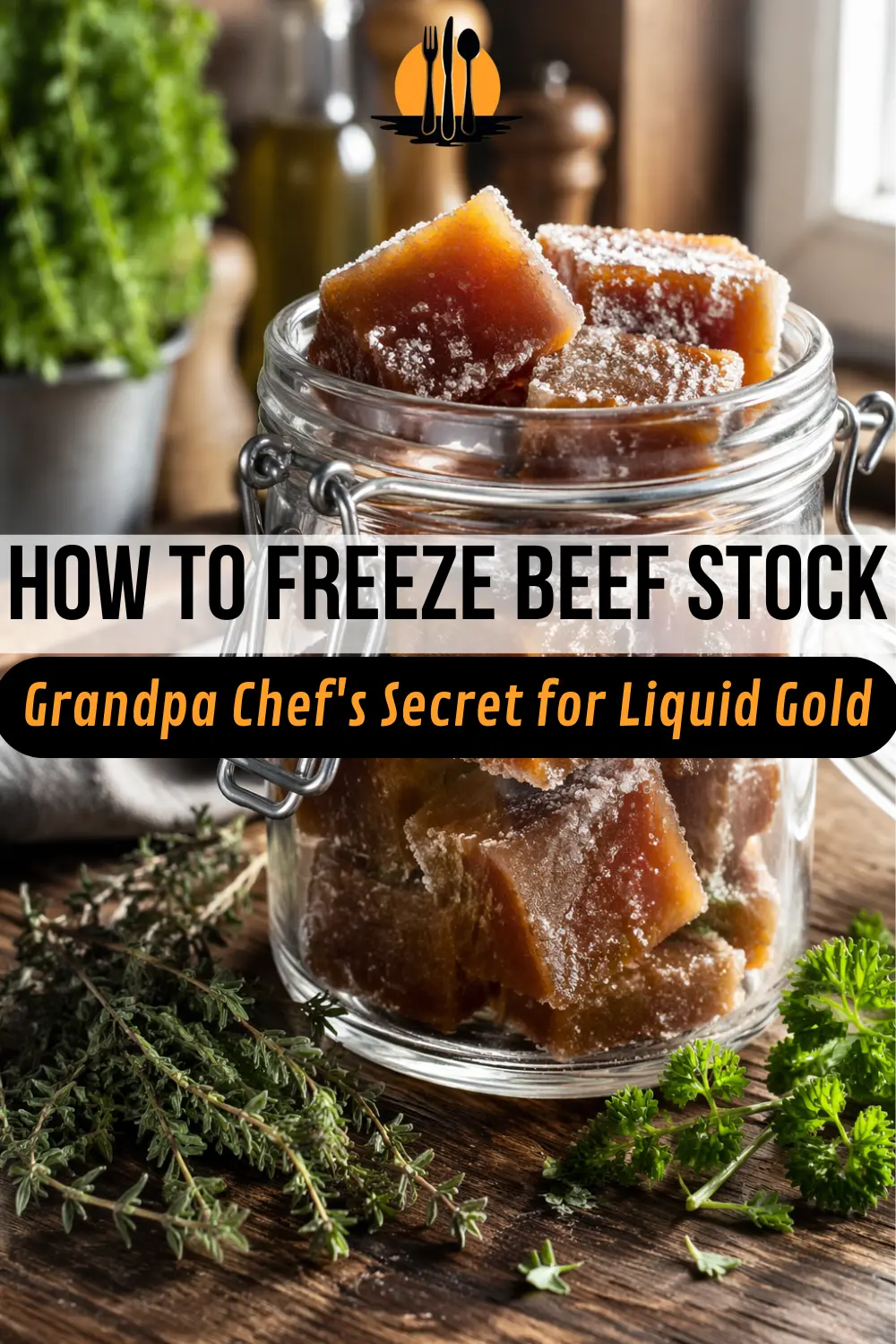
The absolute best way to freeze beef stock begins the moment the silence settles in my kitchen after a long day of simmering marrow bones. Looking at those jars filled with dark, rich liquid, I see hours of roasting and skimming foam, which is why I treat my broth like a financial investment. If you spent your Sunday building those deep flavors, you cannot afford to let a single cup go to waste in the back of the fridge.
I have spent more than 40 years perfecting this professional preservation method because I hate seeing hard work thrown away. This technique is designed to lock in a powerful foundation for dozens of future family meals, keeping your liquid gold tasting as vibrant as the moment it left the stockpot.
Table of Contents
How to Freeze Beef Stock Safely
My kitchen fills with a deep, savory steam that tells me the marrow bones have given up everything they have. I never leave this liquid on the counter to cool on its own because bacterial safety is my first priority. Properly cooling your broth before freezing is the critical step that separates a home cook from an experienced professional.
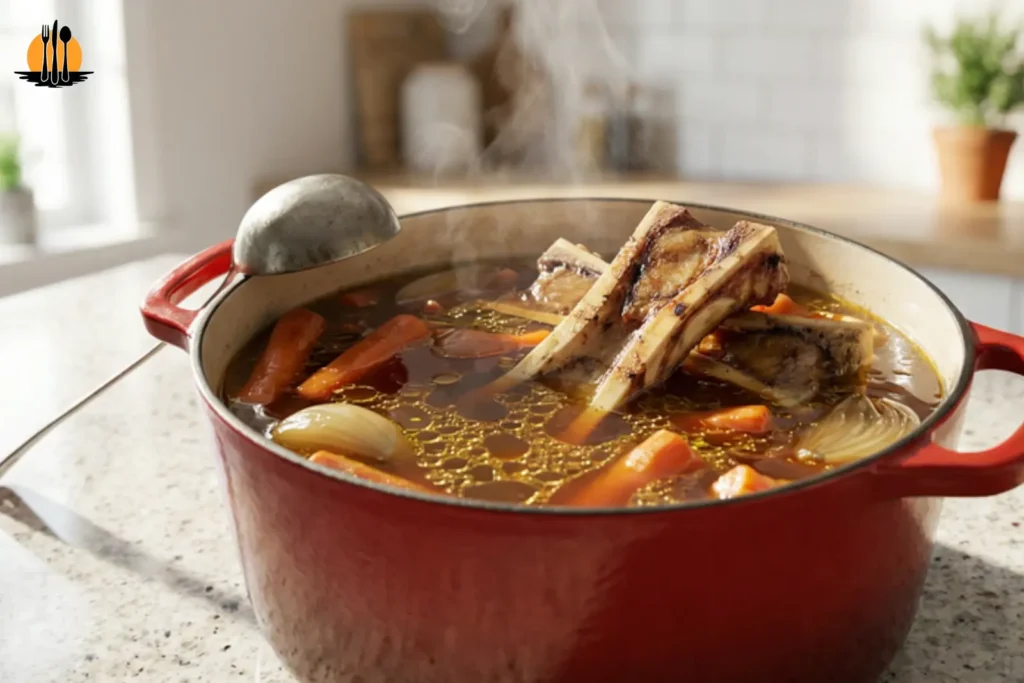
Cooling your stock safely before storage
I always transfer the hot liquid into smaller, shallow pans before placing them into an ice bath to lower the temperature rapidly. This fast chill safely preserves that beautiful jelly-like texture that makes homemade broth special. Once the broth drops below 70°F (21°C), I move the containers into the refrigerator so the liquid can stabilize safely before the next step.
To skim or not to skim: handling the fat layer
While the broth rests in the cold, a firm layer of white tallow rises to the top and seals the liquid underneath. Whisking or lifting this fat layer off with a spoon is ideal because excess surface lipids can go rancid during long-term cold storage. I save that clean beef fat in a separate jar for frying eggs, ensuring every part of my hard work is put to good use.
Choosing the Right Containers for Your Freezer
I have tested every jar and lid in my kitchen over the many decades. You need a vessel that can handle the natural expansion of liquid gold as it turns into solid ice. I always make sure my choice helps me freeze beef stock without any mess or wasted effort in my pantry.
The Mason jar challenge: avoiding cracked glass
I love glass jars because they keep the flavor pure and never leach plastic tastes into my broth. However, you must use the wide-mouth variety and leave at least 1 inch (2.54 centimeters) of headspace for the liquid to expand. This is the absolute secret to successful freezer storage without losing a single container to unexpected cracks.
Space Saving Solutions With Bags and Trays
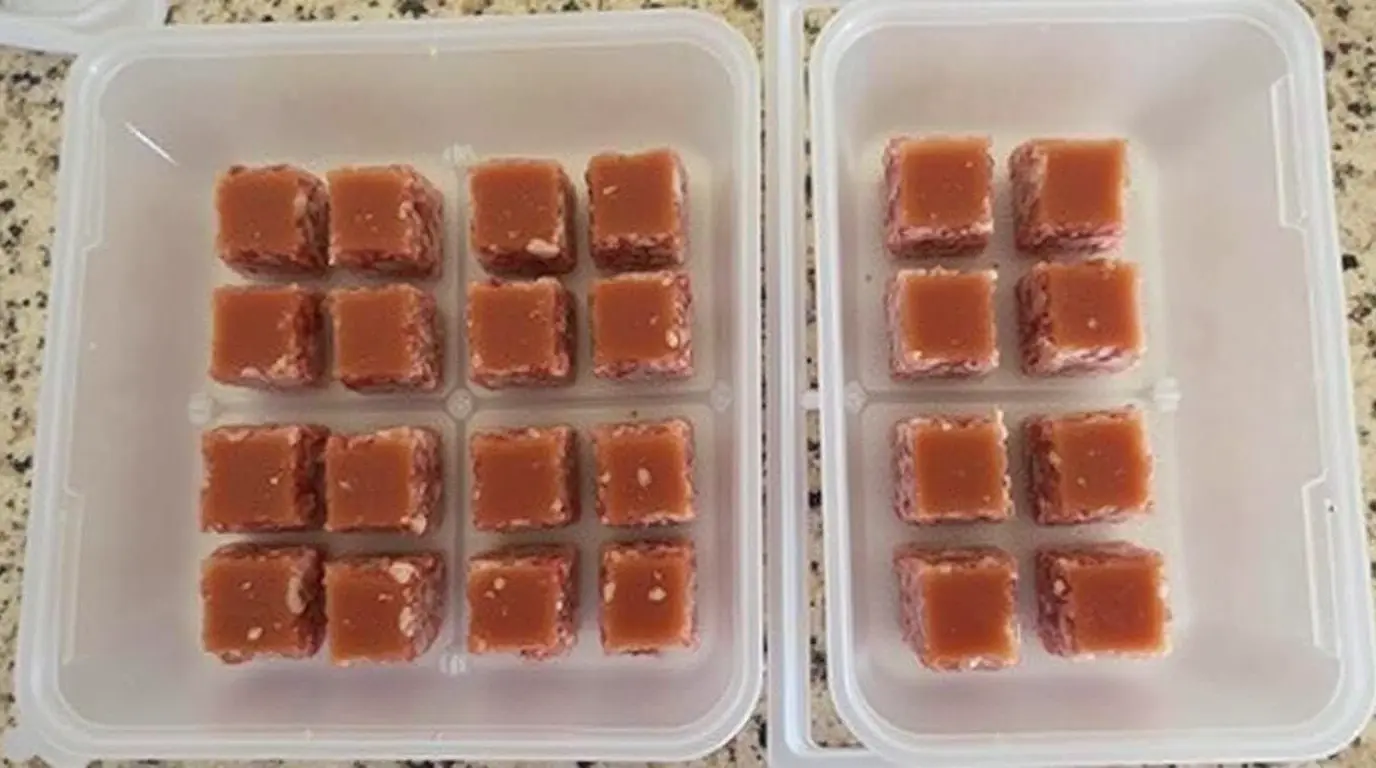
Heavy-duty freezer bags and silicone trays are perfect space-saving tools. I freeze filled bags flat to create thin, stackable bricks. These small portioned cubes are a lifesaver when you need a quick, savory base for my perfect beef pares recipe without thawing a whole jar.
How Long Does Beef Stock Stay Fresh?
I often look at the labels in my freezer and think about the passage of time. Knowing the exact beef stock shelf life is the only way to ensure your family always gets the best quality. I never leave anything to chance when it comes to the safety and the flavor of my kitchen.
Understanding Lifespan in a Deep Freezer
In my experience, the deep flavor of your homemade broth stays at its absolute peak for a specific duration. Maintaining this optimal beef stock shelf life ensures you always have a rich base ready for my healthy beef stew guide. You can technically freeze it longer than 6 months (180 days), but that aroma of roasted marrow bones will slowly start to fade.
Protecting Nutritional Value
Some home cooks worry that intense cold temperatures destroy the healthy collagen extracted from the marrow bones. However, long-term freezing does not break down these robust proteins if the liquid is protected from air. The nutritional value and gelatinous structure stay completely locked inside as long as your storage containers are sealed absolutely airtight.
Thawing and Reheating with Perfection
You must handle the thawing transition correctly to protect your hard work when you freeze beef stock. A slow, 24-hour thaw inside the refrigerator safely preserves the delicate, natural collagen structures before reheating.
The Slow Thaw for Maximum Flavor Retention
I always recommend moving your glass jar from the freezer to the refrigerator 24 hours before you plan to cook. This controlled, slow transition preserves the integrity of your homemade broth so it is ready for complex recipes like my breakdown of iconic beef stew styles. It remains the safest method to keep the gelatin structure from breaking down.
Quick Heat Methods for Busy Weeknights
If you are short on time, place the frozen block directly into a saucepan over low heat. Adding 2 tablespoons (29.57 milliliters) of water helps the ice melt evenly without scorching the concentrated proteins at the bottom of the pan. Bring the liquid to a full rolling boil at 212°F (100°C) to ensure total food safety before serving.
Grandpa Chef’s Secrets for Kitchen Efficiency
I have picked up a few tricks over the years to keep my pantry running like a clock. Efficiency in the kitchen means more time at the table with the people you love. When I freeze beef stock, I always look for ways to save every inch of space for my liquid gold.
Concentrating Flavors to Save Freezer Space
Sometimes I simmer the liquid broth until it reduces by half before cooling and storing it away. This reduction process creates a powerful, gelatinous concentrate that takes up minimal room in a small freezing compartment. When you are ready to cook, simply reconstitute the solid brick by adding an equal volume of boiling water to the pot.
The Labeling Ritual You Should Never Skip
Memory fails in a busy kitchen, making a clear identification system essential to track your beef stock shelf life. Apply a strip of heavy-duty freezer tape and a permanent marker to record the precise creation date and recipe type. This structured discipline prevents mystery jars from getting permanently lost or forgotten in the dark corners of your appliance.
The Grandpa Chef Culinary Finish
Scrape every remaining drop of the dark, cloudy sediment from the bottom of your pot into your containers before you freeze beef stock. These rich particles hold the most intense minerals and roasted bone flavors, providing an invaluable savory base for future family meals.
A Final Kitchen Secret Before You Serve
In my 40 years of kitchen experience, I discovered that a small splash of acidity completely transforms a heavy reduction. Whisking in 1 teaspoon (4.92 milliliters) of raw apple cider vinegar during the final rolling boil brightens the deep umami profile and replicates a professional restaurant sauce.
Honest Meals for Honest People
My commitment is clear: I provide honest, technical guidelines to help you control your beef stock shelf life safely. You get zero fluff, just reliable kitchen standards that work perfectly for your family meals.
Discover More Culinary Strategies
If this preservation guide helps you save time and budget, please share a photo or pin it to your boards. Sharing these technical kitchen wins keeps authentic cooking skills alive. Explore my Main Dishes category to find professional recipes where you can finally add this homemade liquid gold to elevate your meals.
Looking for technical baking precision next? Find more baking science and hands-on expertise at my second site, cakecravingsdaily.com, the home of my deep culinary secrets for desserts.
Let’s Connect on Pinterest
I now focus all my social energy exclusively on Pinterest. It is the only platform where I personally reply to every question every day.
Share your photos and ask me a question here: Grandpa Chef on Pinterest.
From my kitchen to yours, happy cooking.
Grandpa Chef’s Quick (FAQ)
Here are the precise answers to the most common questions I receive from readers who want to safely freeze beef stock at home. Use these technical preservation guidelines to ensure your rich, homemade broth maintains its full culinary value and flavor integrity.
How long does homemade beef stock stay fresh in a deep freezer?
For the absolute best quality and aroma, consume your frozen broth within 6 months (180 days). It technically remains safe to eat long after this period, but the rich, roasted flavors will slowly begin to degrade.
Should I remove the fat layer before freezing beef broth?
I highly recommend skimming the hardened layer of white tallow from the surface before long-term storage. While the liquid broth stays pristine, solid lipids can oxidize and develop off-flavors much faster in the cold.
Does freezing beef stock destroy its nutritional collagen benefits?
Does the cold destroy the collagen and health benefits? In my kitchen, I have found that a properly frozen stock keeps all its body and nutrients exactly where they belong.