
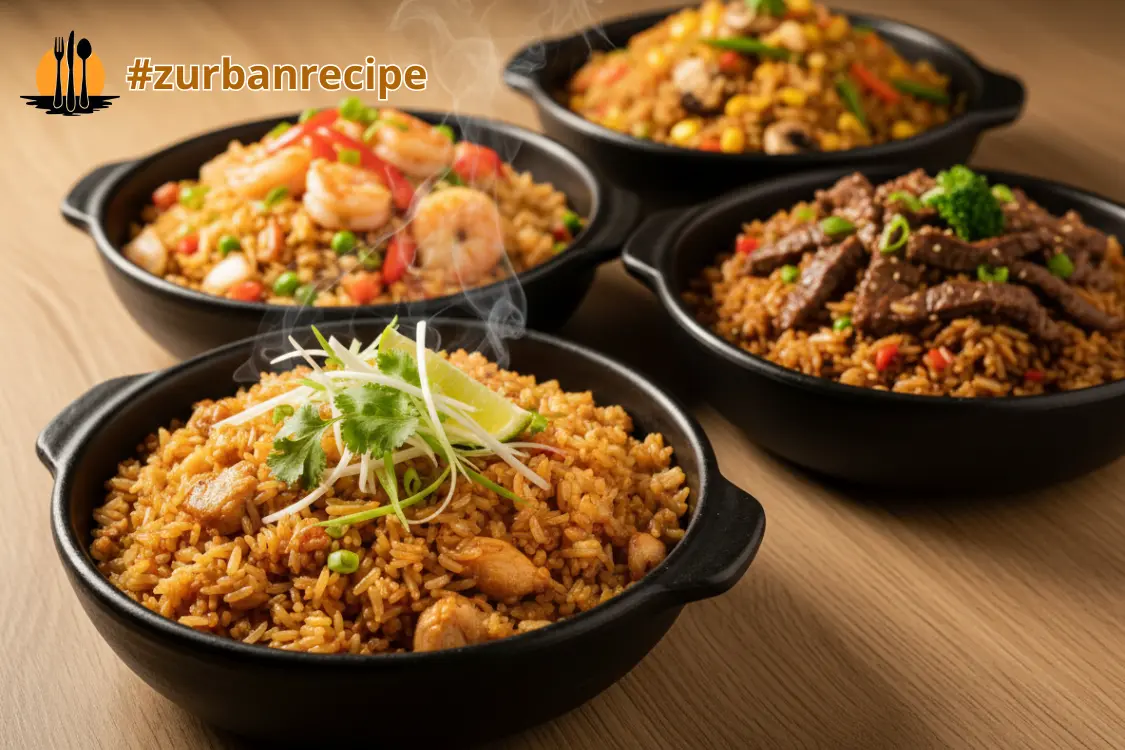
Fried Rice Recipes bring together quick cooking, simple ingredients, and bold flavor in a single pan. It’s one of the easiest dishes to customize for busy weeknights or comfort meals.
In this guide, you’ll learn the essentials of great homemade fried rice, the most popular variations, the mistakes to avoid, and the tips that make every bowl taste better.
Table of Contents
What Makes Great Fried Rice Recipes
Great Fried Rice Recipes all rely on the same foundation, a balance of heat, texture, and seasoning. High heat keeps the rice from steaming, giving each grain a lightly toasted edge, while the mix of aromatics, protein, and vegetables adds layers of flavor. The best versions use rice that’s dry enough to fry, sauces added in small amounts, and a quick cooking method that keeps everything crisp instead of soggy.
Good fried rice is less about strict rules and more about technique, timing, and using what you already have at home.
Essential Ingredients for Fried Rice Recipes
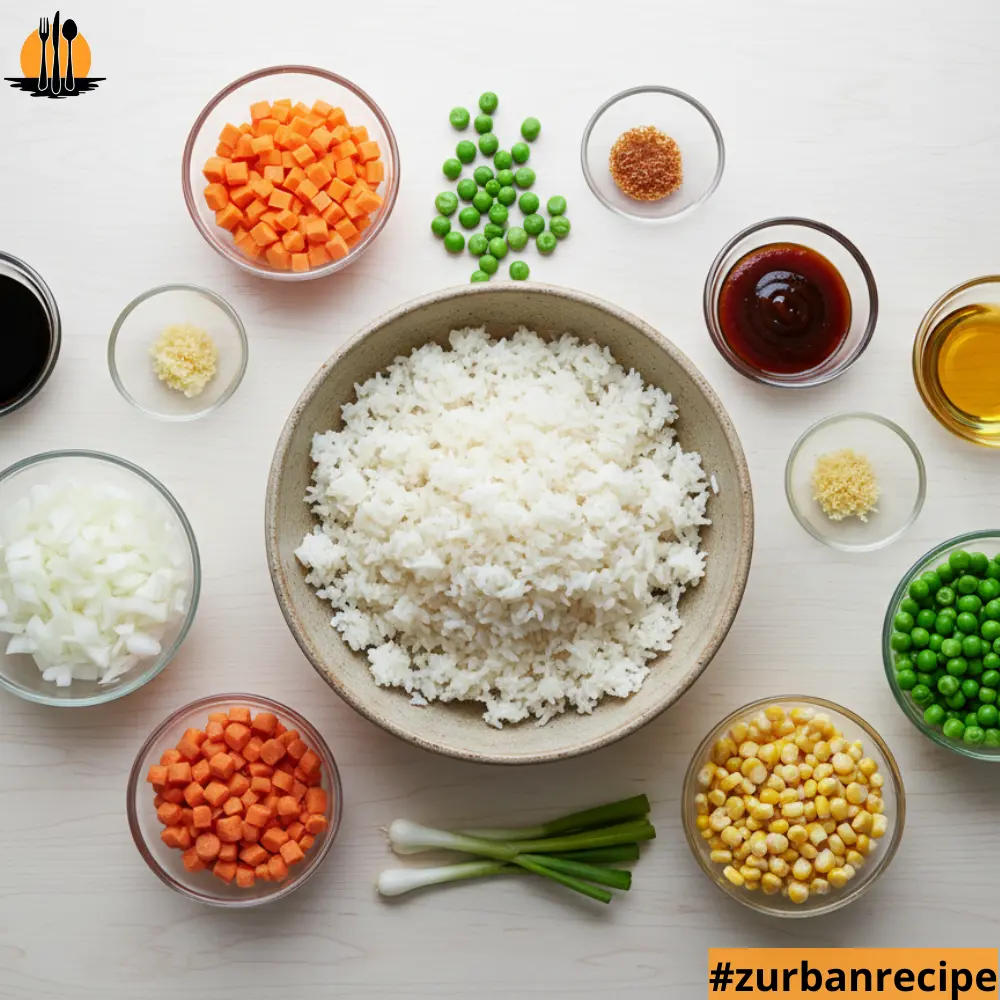
Fried Rice Recipes all start with the same simple idea, cooked rice brought back to life with heat, flavor, and texture in a single pan. Each ingredient plays a role in how the dish turns out, from the rice you choose to the sauces and vegetables you add.
Rice
Day-old rice works best because it’s slightly dry and holds up during high-heat cooking. Fresh rice can become soft or sticky, so cooling it first makes a big difference.
Aromatics
Garlic, ginger, and green onions lay the foundation for the flavor. They add fragrance and warmth before the main ingredients hit the pan.
Sauces and Seasonings
A small amount of soy sauce, a touch of oyster sauce, and a drizzle of sesame oil are enough to season most fried rice dishes. The key is balance, not quantity, so the rice stays crisp instead of soggy.
Proteins
Chicken, beef, tofu, shrimp, or eggs all work well in fried rice. These proteins cook quickly and integrate easily into the dish without overpowering the flavor.
Vegetables
Peas, carrots, bell peppers, cabbage, and bean sprouts add color, texture, and freshness. Chop vegetables into small pieces so they cook fast and blend evenly with the rice.
How to Cook Fried Rice Step-by-Step
Most Fried Rice Recipes follow the same basic method. The key is high heat, quick movement, and letting the rice fry instead of steam. These steps give you the foundation for making any style of fried rice at home.
Prep the Rice
Use chilled, day-old rice when possible. Cold rice keeps its shape and fries evenly without becoming mushy.
Heat the Pan
A wok or wide pan works best. Heat it until very hot before adding oil so the rice and ingredients cook quickly.
Cook the Aromatics
Add garlic, ginger, or green onions first. A few seconds in hot oil releases their flavor and builds the base for the dish.
Add Proteins and Vegetables
Cook proteins until heated through, then add quick-cooking vegetables. Keep everything moving to prevent sticking.
Fry the Rice
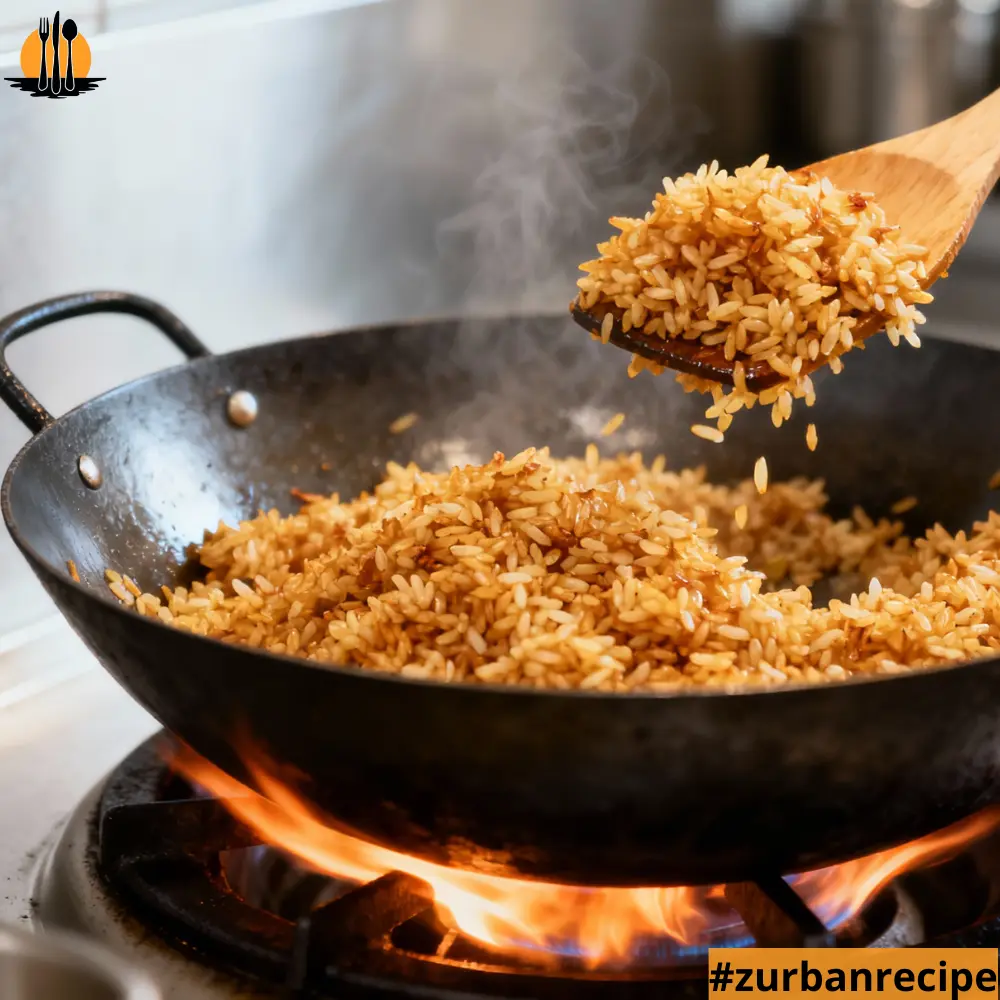
Add the rice and break up any clumps. Let it fry for a few seconds before stirring so it develops a light, toasted texture.
Season and Finish
Add sauces in small amounts to avoid sogginess. Finish with white pepper or sesame oil for flavor, then fold everything together.
Popular Fried Rice Variations
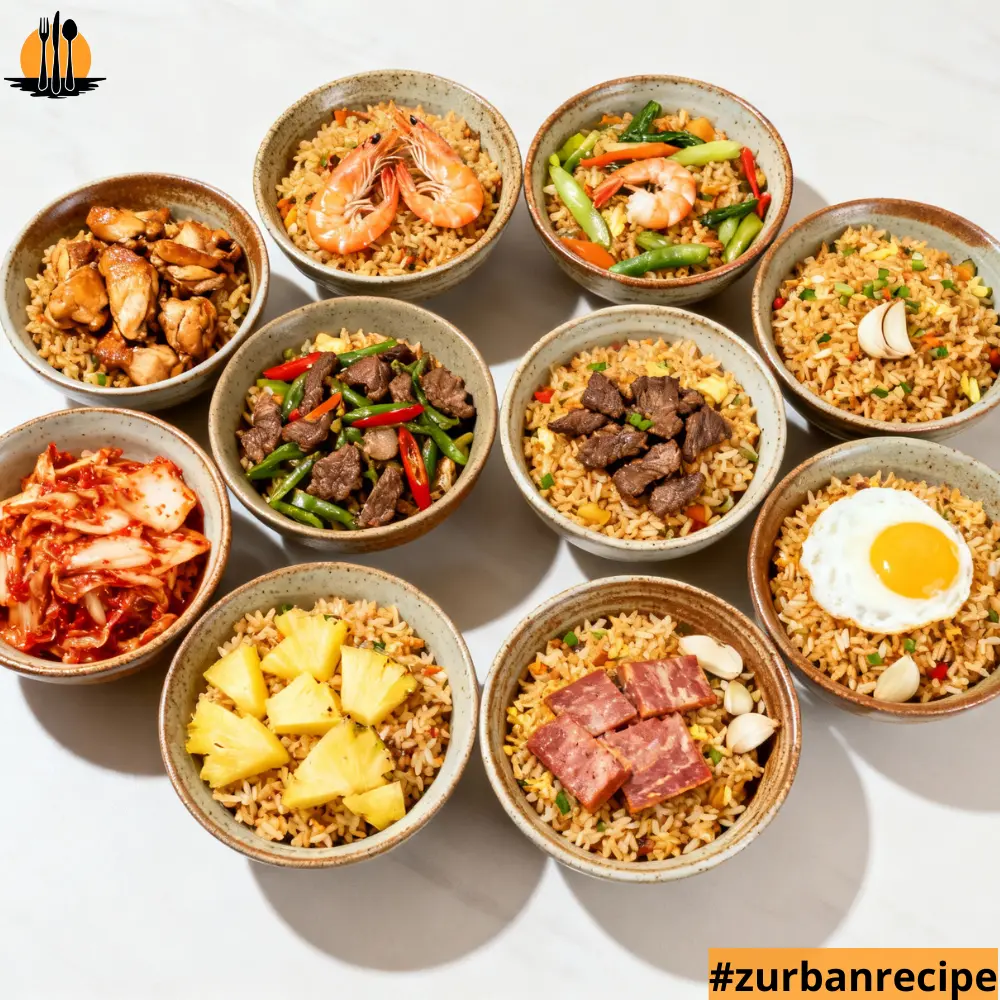
Fried Rice Recipes appear in many styles around the world. Each version uses the same basic method but changes the ingredients to highlight different flavors and traditions. Here are the most popular variations home cooks search for.
Chicken Fried Rice
A classic takeout-style version with tender chicken pieces, quick-cooking vegetables, and light seasoning. It’s comforting, familiar, and works with almost any leftover chicken you have in the fridge. It also pairs well with Grandma’s fried chicken for a full home-style combo.
Shrimp Fried Rice
This variation uses juicy shrimp that cook in seconds, adding a naturally sweet and savory flavor. It works especially well with garlic and a splash of soy sauce, or alongside dishes like chicken and shrimp recipes for even more flavor variety.
Beef Fried Rice
A hearty option made with thinly sliced steak or ground beef. The rich flavor of beef pairs well with aromatics and creates a satisfying, full-meal version of fried rice, similar to our beef and broccoli stir fry for those who enjoy savory, Asian-inspired beef dishes.
Vegetable Fried Rice
Colorful, simple, and flexible. You can use peas, carrots, corn, mushrooms, or any veggies on hand for a fast, budget-friendly dish that still tastes great.
Pineapple Fried Rice
A Thai-inspired variation known for its blend of sweet pineapple chunks and savory sauces. It often includes cashews or raisins for extra texture and contrast.
Kimchi Fried Rice
Bold, spicy, and full of umami thanks to fermented kimchi. This version is quick to make and naturally flavorful, especially when topped with a fried egg.
Garlic Fried Rice
Centered around golden, toasted garlic and a bit of butter or oil. It’s simple but incredibly aromatic, making it a popular choice for breakfast or as a side dish.
Egg Fried Rice
One of the easiest and most versatile versions. Soft scrambled eggs are folded into the rice with aromatics and a splash of soy sauce, creating a fast and satisfying meal.
Spam Fried Rice
A quick, comforting variation made with diced Spam that fries until golden and crisp.
For the full detailed recipe, check out our dedicated Spam Fried Rice article.
Breakfast Fried Rice
A morning-style take with eggs, leftover rice, and breakfast-friendly add-ins. It’s fast, filling, and a great way to use what’s already in the fridge.
Common Fried Rice Mistakes and How to Fix Them
Homemade Fried Rice Recipes often fail for the same simple reasons. Most problems come from too much moisture, low heat, or adding ingredients in the wrong order. Here are the issues people face most often and how to fix them quickly.
Your Fried Rice Turns Mushy
This happens when the rice is warm, fresh, or too wet. Use day-old rice that has dried out, or spread freshly cooked rice on a tray and chill it before frying.
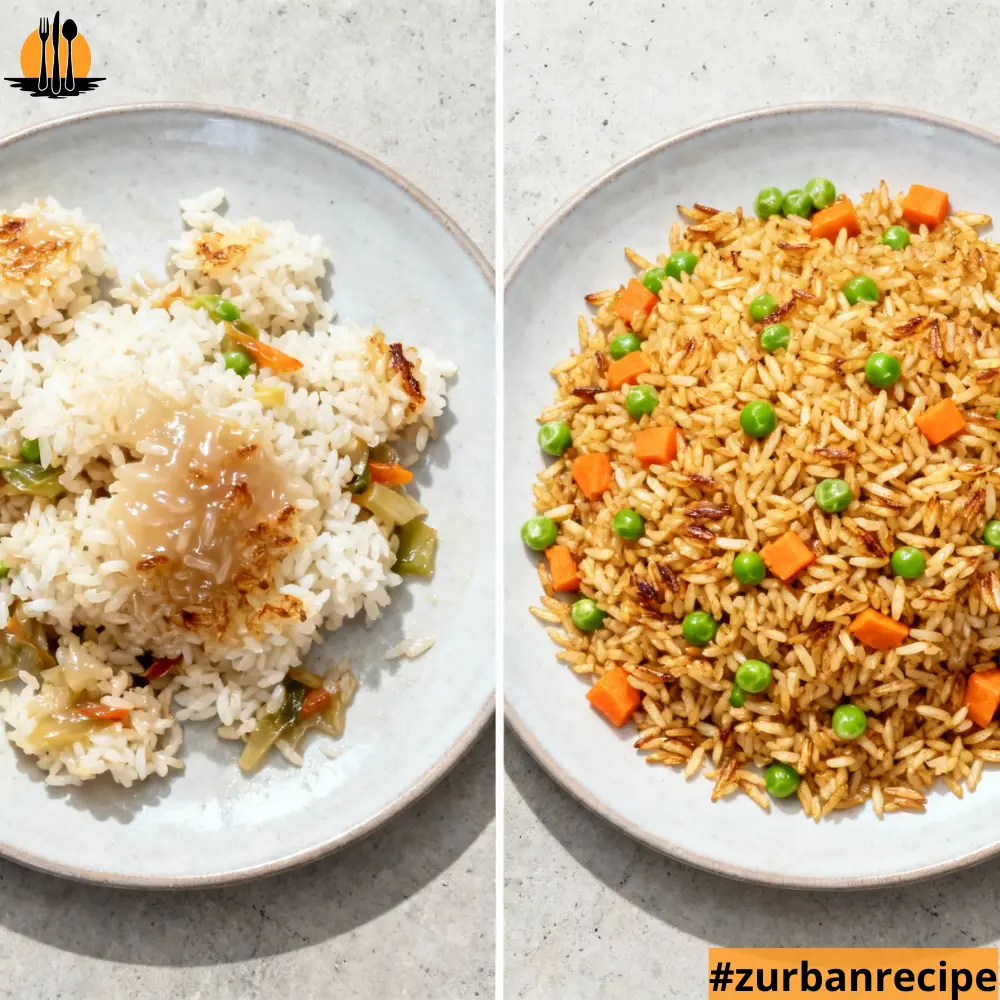
The Rice Doesn’t Get That “Toasted” Taste
The pan isn’t hot enough. Preheat the wok until it’s almost smoking, then add oil and rice so the grains fry instead of steam.
Everything Sticks to the Pan
This usually means the pan wasn’t hot before you added ingredients. Heat the pan first, then add oil, then aromatics.
The Flavor Tastes Flat
You may be adding too much soy sauce or not enough aromatics. Garlic, ginger, and green onions build flavor quickly without making the rice soggy.
The Rice Clumps Together
Break up clumps with the back of a spoon as soon as you add the rice. A splash of oil can help separate the grains.
The Sauce Makes It Too Wet
Add sauces in small amounts. It’s easier to add more later than to fix sogginess.
Storage and Reheating Tips for Fried Rice Recipes
How to Store Fried Rice Properly
Let your fried rice cool slightly (no more than 30 minutes), then store it in an airtight container. Keeping too much moisture inside the container encourages bacterial growth and can make the rice soggy, so avoid sealing it while steaming hot.
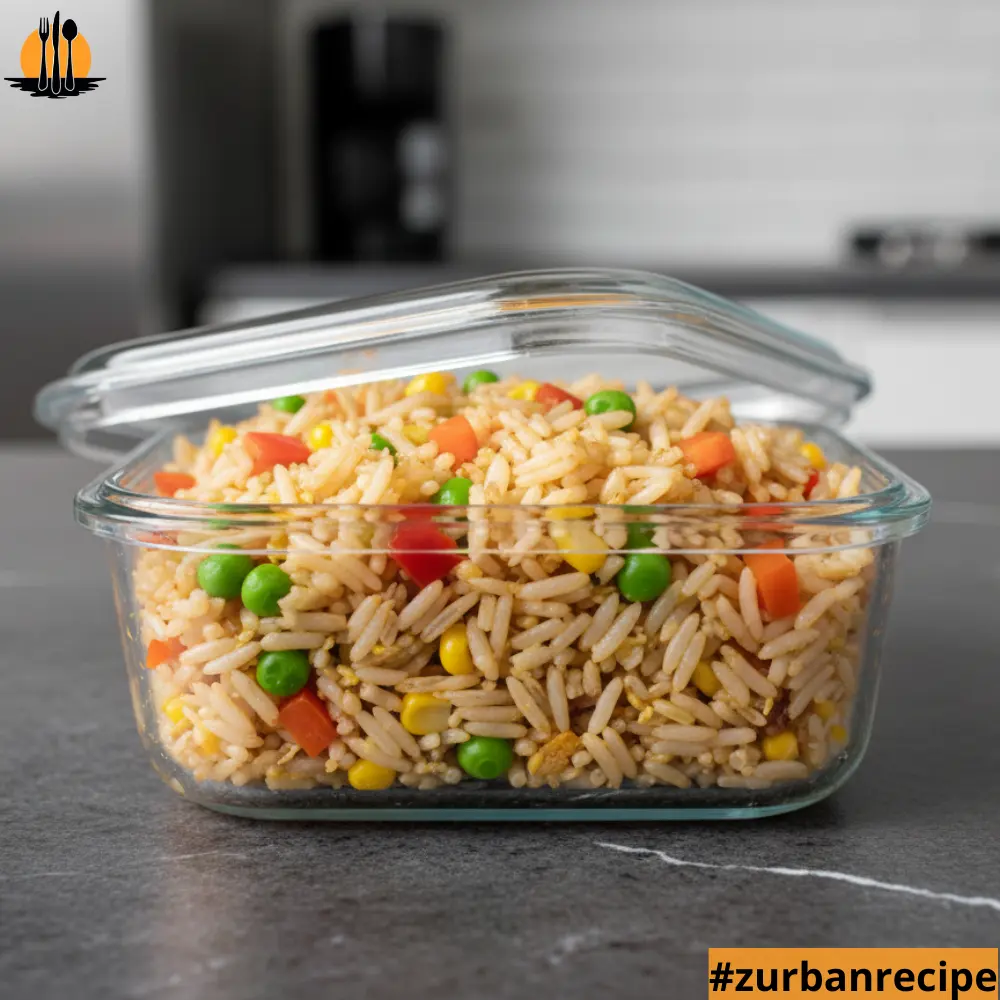
How Long Fried Rice Lasts in the Fridge
Properly stored fried rice lasts 3 to 4 days in the refrigerator. If the dish contains seafood, try to eat it within 1 to 2 days for best safety and flavor.
Can You Freeze Fried Rice?
Yes, fried rice freezes very well. Spread it flat in a freezer bag or airtight container and freeze for up to one month. The texture stays surprisingly good because the grains are already dry from stir-frying.
How to Reheat Fried Rice Without Drying It Out
For the best results, reheat fried rice in a hot skillet with a teaspoon of oil. Add a splash of water, cover for 30 seconds, then stir. This brings back moisture and restores the lightly crisp texture.
Microwave reheating works too, but the rice may turn softer.
Signs Your Fried Rice Should Not Be Eaten
If the rice smells sour, feels sticky or slimy, or has been left at room temperature for more than 2 hours, it’s safer to discard it.
The Best Tips for Perfect Fried Rice Every Time
Great Fried Rice Recipes depend more on technique than complicated ingredients. With a few simple habits, your fried rice will taste closer to restaurant-style every time. These tips work for any variation.
Use Day-Old Rice
Rice that has dried out overnight separates easily and fries instead of turning mushy.
Prep Everything Before Cooking
Fried rice cooks fast. Having vegetables, proteins, and aromatics ready keeps the dish from overcooking.
Keep the Heat High
A hot pan gives the rice its toasted edges and prevents steaming.
Add Sauce Sparingly
Start with small amounts. Too much liquid makes the rice soft and heavy instead of crisp.
Stir, but Not Too Much
Let the rice sit for a few seconds between stirs so it can fry and develop texture.
Finish with Fresh Flavor
Green onions, sesame oil, or white pepper added at the end lift the entire dish without making it wet.
What to Serve with Fried Rice Recipes
Fried Rice Recipes pair well with quick proteins, simple vegetables, and light sides that balance the salty, savory flavors. These ideas work for weeknights, meal prep, or family-style dinners.
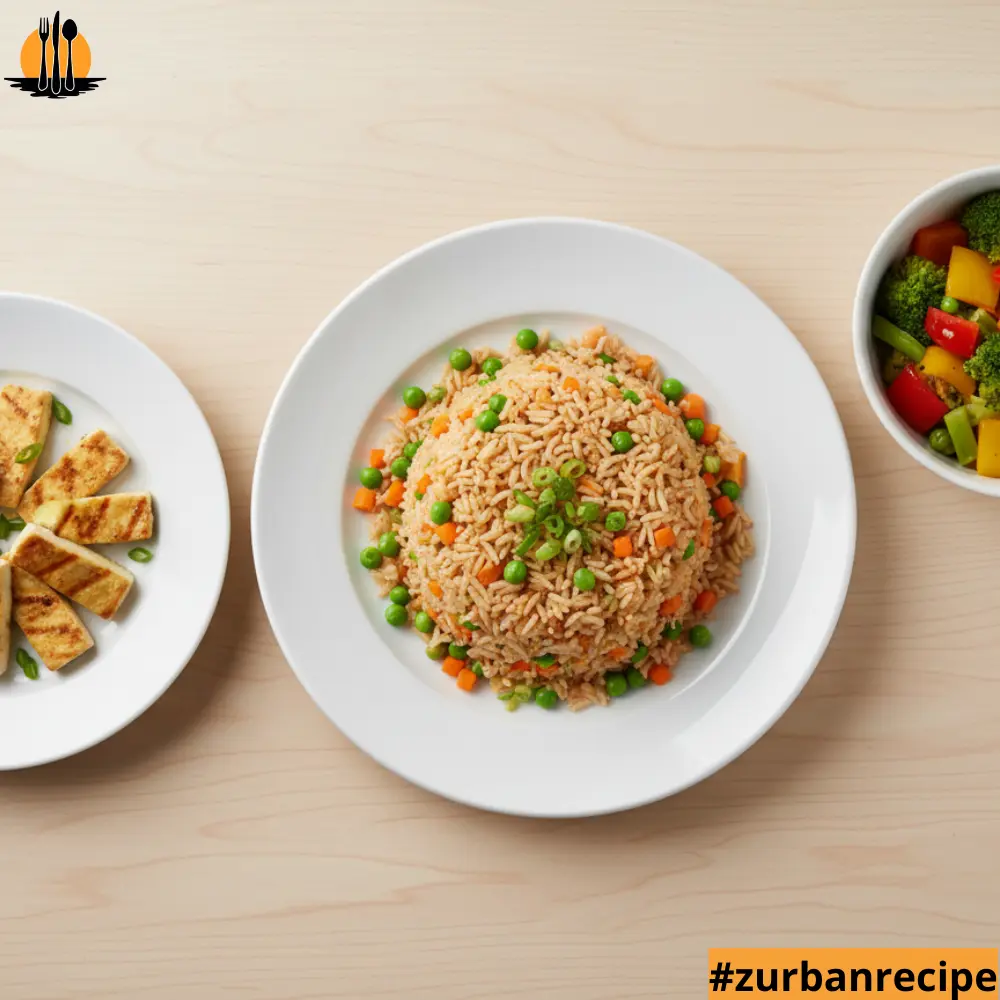
Simple Grilled Chicken
A mild, lean protein that balances the richness of fried rice. Slice it thin for easy serving.
Stir-Fried Vegetables
Broccoli, snap peas, or bok choy bring freshness and crunch without overwhelming the dish.
Quick Asian-Style Salads
Cabbage slaw or cucumber salad adds cool contrast and makes the meal feel lighter.
Egg Rolls or Spring Rolls
A crispy side that fits naturally with fried rice and creates a takeout-style plate.
Soup on the Side
Miso soup or simple chicken broth works well as a warm, comforting starter.
Pan-Seared Shrimp
A fast, flavorful upgrade that cooks in minutes and pairs naturally with fried rice.
Pro Tips for Fried Rice Recipes at Home
Use Day-Old Rice for the Best Texture
Refrigerated rice loses excess moisture, which keeps each grain separate and prevents clumping when stir-fried.
Cook on High Heat
High heat gives fried rice its signature lightly toasted edges and prevents ingredients from steaming instead of frying.
Do Not Over-Sauce the Rice
A small amount of soy sauce and oyster sauce is enough. Too much liquid makes fried rice mushy and heavy.
Prep Everything Before Starting
Fried rice cooks fast. Have your garlic, veggies, eggs, and sauces ready before the pan gets hot.
Add Oil in Two Stages
A little at the beginning helps the aromatics cook, and a small drizzle at the end adds shine and flavor.
Let the Rice Sit for a Few Seconds
Don’t stir nonstop. Allowing the rice to rest briefly in the pan gives you that slightly crispy restaurant-style finish.
Frequently Asked Questions About Fried Rice Recipes
Why is my fried rice always mushy?
Fried rice turns mushy when the rice contains too much moisture. Freshly cooked rice is too soft and steamy, causing the grains to clump together. For best results, use day-old refrigerated rice or spread fresh rice on a tray and chill it for at least 30 minutes before cooking.
How do I make fried rice not sticky?
Use cold, dry rice and cook over high heat. A hot pan prevents steaming and helps the grains stay separate. Also avoid adding too much sauce, as excess liquid makes the rice sticky instead of lightly toasted.
What rice is best for fried rice?
Medium- or long-grain rice works best because the grains stay separate when stir-fried. Jasmine rice is the most popular choice for Chinese or Thai fried rice, while basmati gives a lighter, fluffier texture for fusion versions.
Do I have to use eggs in fried rice?
No, eggs are optional. They add richness and protein, but you can skip them or replace them with tofu scramble, extra vegetables, or additional protein depending on your dietary preference.
Chef’s Note
Fried rice recipes work best when you keep the heat high, the rice dry, and the ingredients simple. Let the pan do the work, give the rice a moment to crisp, and adjust the seasoning to your taste, that’s where the real flavor comes from.
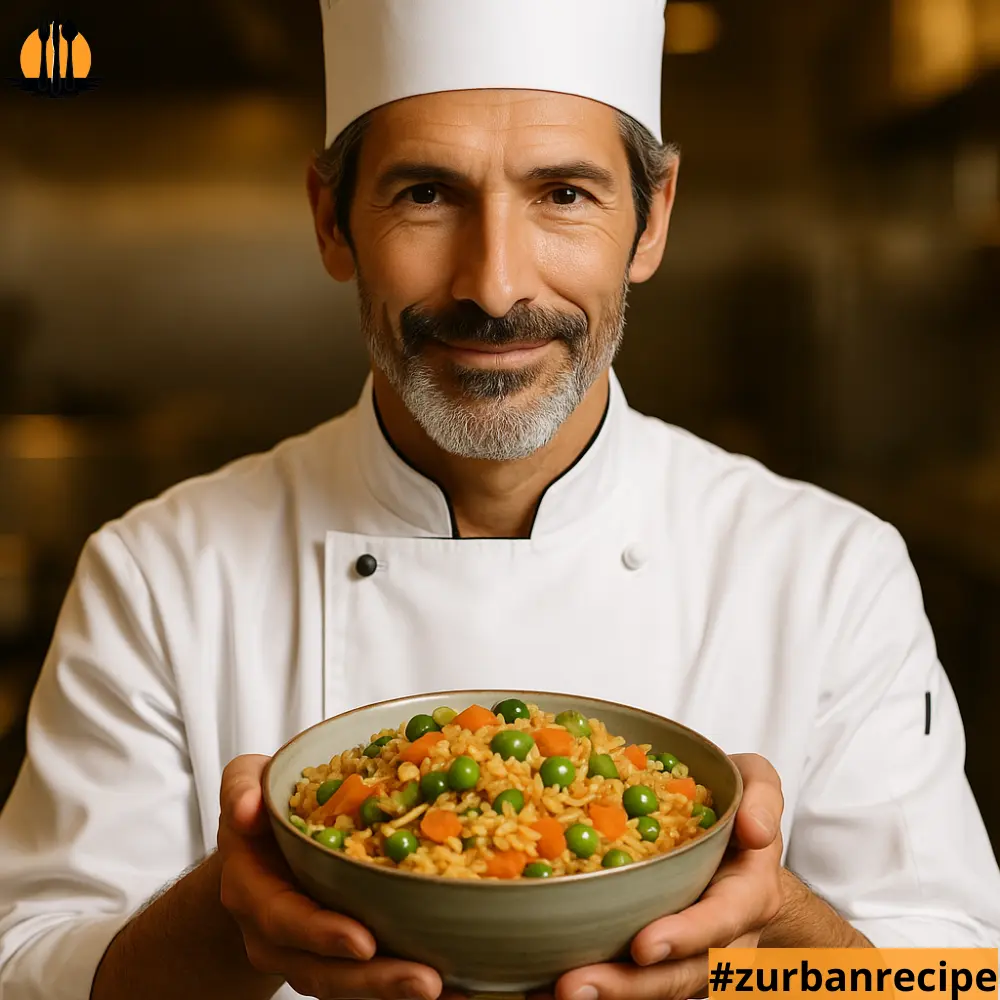
What matters most is cooking with confidence. Once you understand the basics, you can make any version you want, from classic vegetable fried rice to rich, savory variations. Keep it simple, trust the process, and enjoy every bowl.