
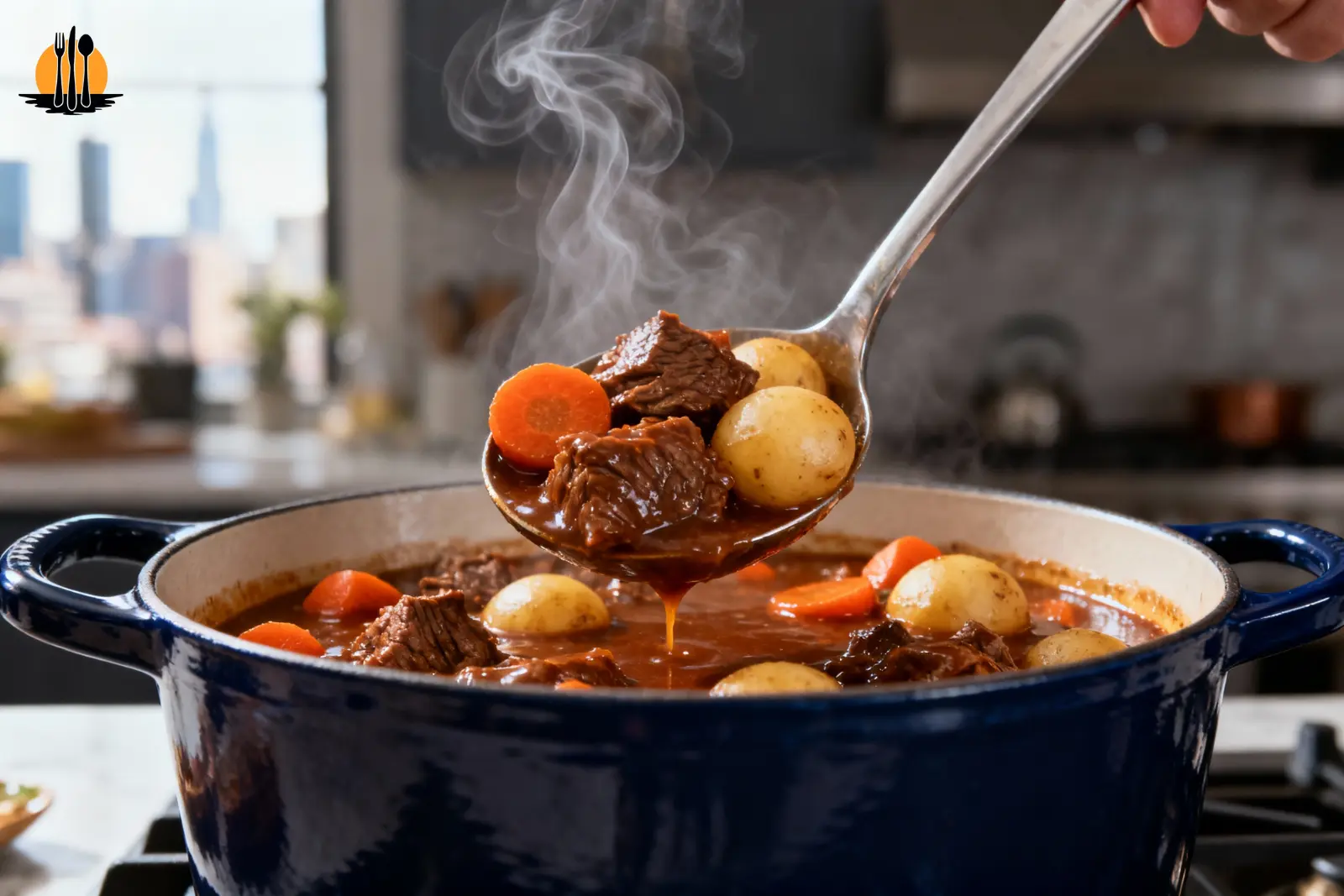
I have spent more than four decades standing over heavy pots and listening to the gentle hum of a simmering kitchen. In my forty years of family cooking: I have learned that a great meal is not just about a list of ingredients. It is about the soul you put into the process.
My urban kitchen has seen countless versions of the perfect bowl. However: one dish remains the absolute king of comfort for me. We are going to dive deep into the techniques I have refined through thousands of hours of trial and error. This is not just a guide: it is my legacy.
Table of Contents
The Meat Science: Understanding Collagen and Muscle Fiber
I always tell my grandkids that a great meal starts long before the stove is even turned on. It begins with understanding how the meat actually behaves when it meets the heat in my kitchen.
The Anatomy of Chuck Roast: Why Fat is Not Your Enemy
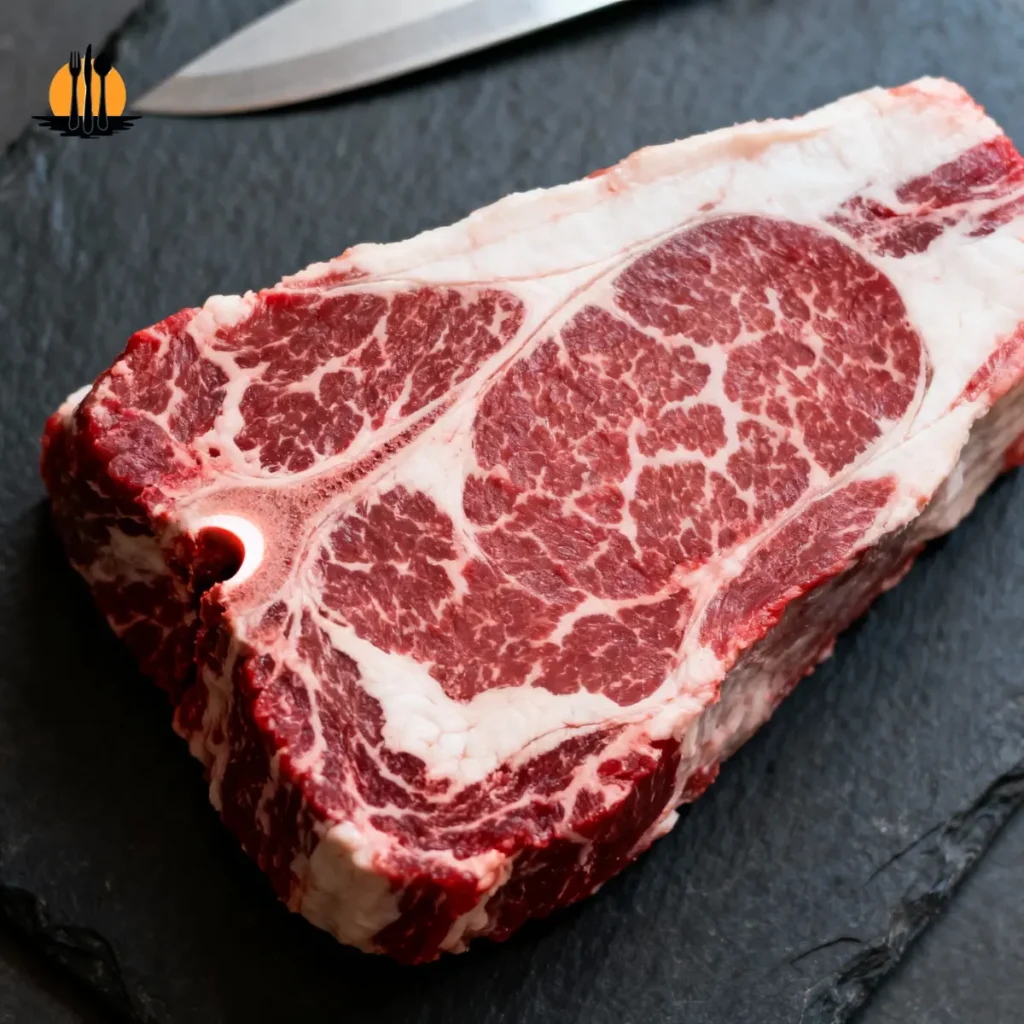
I always buy a thick chuck roast when I start my Beef Stew. I look for white veins of fat called marbling throughout the meat. This fat melts slowly and keeps every bite moist during the long cook. Lean cuts will always become dry and tough in my heavy pot. I trust my eyes and my hands to find the right piece every time.
My experience has shown me that this specific cut is the only way to achieve a rich and savory result for the family. I have spent years studying the butcher block: and you can find more details in my individual beef cuts guide to help you choose the best meat.
The Collagen to Gelatin Transformation: A 160°F Miracle
There is a secret science to this cooking process that I have always loved. Meat has tough collagen that feels like rubber when it is raw. When the pot hits 160 degrees: this tissue turns into a silky and rich gelatin. This change gives the sauce a beautiful shine and a deep texture. It is a miracle that only happens with steady heat and a little bit of patience. I have watched this transformation thousands of times: and it never fails to amaze me.
Why is My Meat Still Tough?
People often tell me their Beef Stew is still chewy after hours on the stove. I tell them to stop rushing and let the heat do its work. If the meat feels firm: it means the collagen has not melted into gelatin yet. I use a simple fork to test the texture before I serve my guests. If the fork does not slide in easily: I keep the lid on and wait. Time is the only thing that can fix a tough piece of meat in a slow simmer.
Grandpa Chef’s Reality Check: What If You Have No Time?
I know that for my city friends, finding those four hours for a slow simmer can feel like a luxury you don’t have. But I never want you to sacrifice the quality of your braise just because your calendar is full.
If you are racing against the clock, I have mapped out exactly how I use Beef Stew Meal Planning to fit these traditional techniques into a hectic urban schedule. It is my secret for turning a long simmer into an easy, high-quality weeknight win.
The Urban Arsenal: Choosing the Right Heat Conductors
Choosing the right tools is just as important as the ingredients you put inside the pot. In my urban kitchen: I have spent decades mastering the art of slow cooking to ensure every meal is a success.
Dutch Ovens vs. Stock Pots: The Thermal Mass Factor
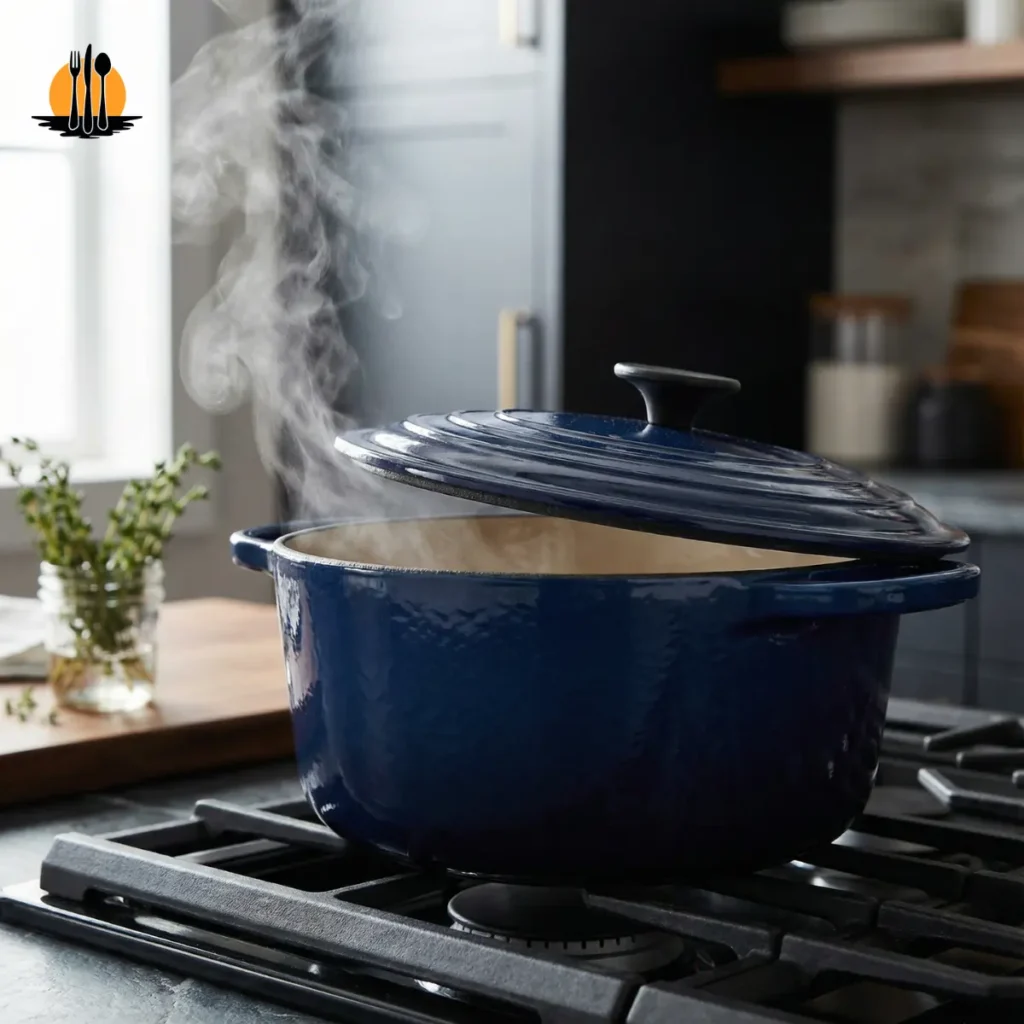
I have learned that a heavy pot is my best friend for making a hearty Beef Stew. I always reach for my cast iron Dutch oven because it holds heat so well. A thin pot will create hot spots and burn your hard work before the meat is even tender.
Managing Heat Spikes in Small City Apartments
My city apartment has a stove that can be very hard to control at times. I use a heat diffuser to keep the flame gentle and even throughout the day. I listen for a soft bubbling sound against the heavy metal to know the temperature is perfect.
Why Material Science Matters for a Consistent Simmer
I prefer enameled cast iron because it keeps a steady simmer for this type of Beef Stew. It does not react with the wine or tomatoes I add for flavor. This steady warmth is the secret to getting a consistent result every time I cook for my grandkids.
The Maillard Mastery: Searing for Molecular Depth
Creating a deep layer of flavor starts with the intense heat of the pan and the savory smell of the meat. I believe that this initial browning is the secret to making the ultimate comfort food for my family and friends.
The Fond: Harvesting the Caramelized Gold
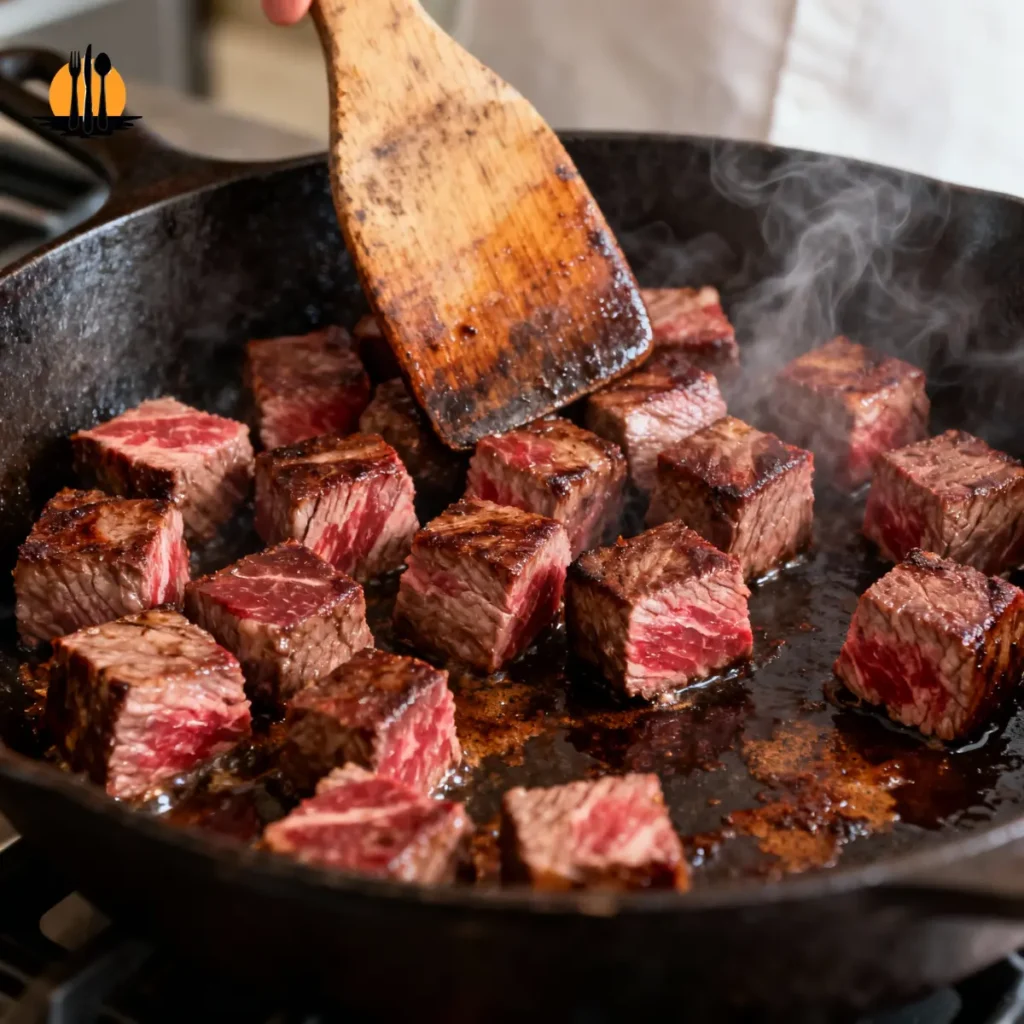
I love the rich smell in my kitchen when I sear the meat for my Beef Stew. Those little brown bits stuck to the bottom are called the fond. I always use a wooden spoon to scrape them up because they hold the deep flavor my family loves.
The Crowded Pan Sin: Avoiding the Steam Trap
I never put all the beef in the pan at once during this important stage. If you crowd the pot: the meat will steam in its own juice instead of browning properly. I work in small batches to hear that perfect sizzle that promises a savory result every single time.
Can I Achieve Rich Flavor Without Searing?
You might wonder if you can skip this step when making a Beef Stew. I have tried it both ways over my forty years of cooking: and the flavor is never as deep. Searing creates a complex taste that you just cannot get by simply boiling the meat in liquid.
The Liquid Blueprint: Balancing pH and Body
The liquid you pour into the pot is more than just a way to keep the food moist. I have learned that braising beef requires a careful balance of acidity and richness to reach perfection in my kitchen.
The Role of Tannins and Acidity in Fiber Breakdown
I always use a dry red wine to help break down the fibers in my Beef Stew. The natural acidity works with the heat to make the meat even more tender over time. I pick a bottle I enjoy drinking: because those flavors will get stronger as the pot simmers in my kitchen.
While I love the French method, remember that the liquid is your passport to the world. Other cultures rely on dark beer or soy sauce to tenderize the meat. You can explore these global variations in my guide to 10 Iconic Beef Stew Styles
Deglazing Physics: Releasing the Essence
Pouring the liquid into a hot pot creates a sudden burst of steam that lifts the flavor from the metal. I use my spatula to release those savory bits so they can melt back into the sauce. This simple step creates the dark color and deep taste that my family expects from every good meal I serve.
Choosing Between Stock, Broth, and Bone Juice
Choosing a high quality stock is the final secret to a perfect Beef Stew. I prefer using a homemade bone broth because it adds a silky texture to the gravy. A rich liquid ensures that every spoonful is full of life and nourishment for the people I love most. A rich liquid is the soul of your meal: and I always suggest starting with the foundation found in my beef stock recipes for the best flavor.
The Umami Architecture: Layering Flavor Without Chemicals
Building layers of taste is like painting a picture with simple ingredients and steady heat. I use my years of experience to turn a simple pot into a bowl of comfort food that satisfies everyone at my table.
The Secret Trio: Anchovies, Soy, and Tomato Paste
I brown a little tomato paste until it looks like dark brick for a deep base. A splash of soy sauce adds a hidden layer of savory depth to my Beef Stew. This simple secret makes the dish taste truly professional. Getting the spices right is a craft of its own: so feel free to use my personal beef stew seasoning recipe for the best results in your kitchen.
Boosting Flavor Without Extra Sodium
Mushrooms and a drop of balsamic vinegar create a rich taste without using much salt. These small tricks provide a deep flavor for the whole family to enjoy. I have used these natural boosters for many years in my kitchen.
The Strategic Timing of Salt in Long Cooks
I always wait until the final thirty minutes to add any salt to the pot. This prevents the Beef Stew from becoming too strong as the liquid evaporates during the day. It is the best way to keep the seasoning perfectly balanced for my guests.
The Vegetable Timeline: Preserving Texture and Color
Timing is everything when you want your vegetables to stay bright and firm in the pot. I treat my carrots and potatoes with the same respect as the braising beef I have selected for the meal.
Hard Roots vs. Soft Aromatics: The Staggered Entry
I never throw all my vegetables into the pot at the very beginning of the cook. I start with onions to build a flavor base: and the way I caramelize them is very similar to the deep methods I use for my french onion soup when I want a rich color. I save the carrots for much later to keep every ingredient fresh and bright in my Beef Stew.
Sugars and Starches: How Potatoes Modify the Sauce
Yukon Gold potatoes are my favorite choice because they hold their shape so well under heat. They release just enough starch to make the sauce feel rich and creamy without being too heavy. I love how they soak up the juices without falling apart into a mushy mess.
My 40-Year Rule for the Perfect Carrot Bite
I cut my carrots into large chunks so they can survive the long hours on the stove. I have learned over forty years that adding them too early ruins their natural sweetness. A perfect Beef Stew needs vegetables that still look beautiful when you serve them to your family.
The Physics of Thickening: From Roux to Modern Alternatives
Getting the texture of the sauce right is a key part of the slow cooking process in my home. I focus on creating a velvety finish that coats every piece of meat and vegetable perfectly for my family.
The Flour Coating Technique vs. Final Slurry
I like to dust my meat with a little flour before searing to create a natural thickener. This old school method gives my Beef Stew a rustic and hearty feel that is hard to beat. It is much better than adding a cold slurry at the end which can sometimes taste like raw starch.
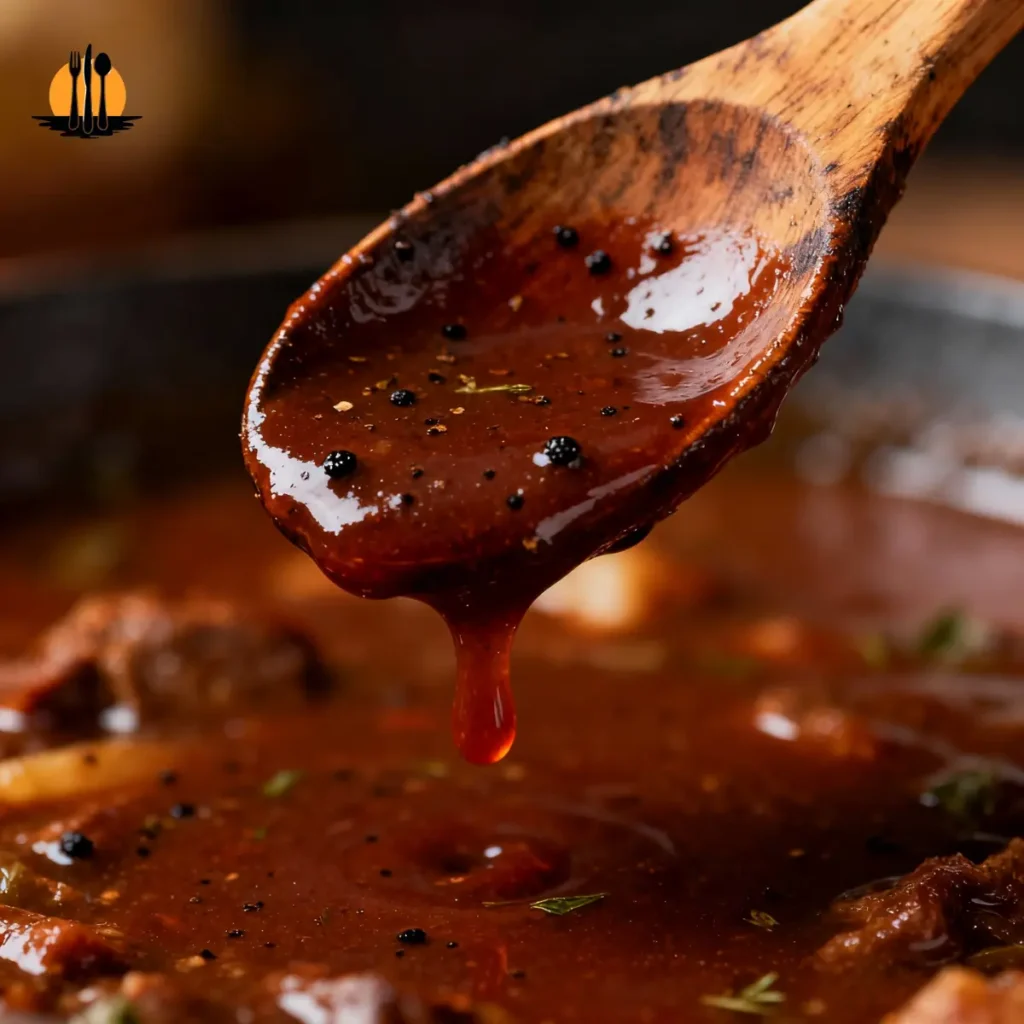
Emulsification Secrets for a Velvety Mouthfeel
I have found that whisking in a small piece of cold butter right before serving creates a beautiful shine. This simple step helps to bind the fats and liquids into a smooth and velvety sauce. My grandkids always notice the difference when the gravy looks rich and professional on their plates.
How to Thicken for a Keto Diet
If you are looking for a lower carb option: I often use pureed cauliflower or a bit of xanthan gum. This allows you to enjoy a thick sauce without using traditional flour or cornstarch. For a deeper look into dietary needs and ingredients: I suggest reading my healthy beef stew guide where I share all my secrets for a heart-healthy pantry. I have tested these modern tricks in my kitchen to make sure they still satisfy the soul.
The Patience Principle: Kinetic Energy and Resting
Taking your time is the most important lesson I can teach you after forty years at the stove. I have found that true comfort food only reveals its secrets when you let the heat stay low and give the pot time to rest.
The Gentle Simmer vs. The Violent Boil: Protecting the Protein
I always keep my Beef Stew at a very low and gentle simmer on the back of the stove. If you let the liquid boil too hard: the heat will toughen the meat and ruin the tender texture I have worked so hard to create. I watch for those tiny bubbles that tell me the temperature is just right for a long and slow cook.
Molecular Migration: Why the Second Day is Superior
There is a real reason why this dish often tastes even better the next morning after it has had time to sit. As the pot cools down: the flavors move deep into the meat and the sauce becomes much more complex and rich. My family always looks forward to the leftovers because they know the taste has finally reached its full potential.
The Resting Phase: Letting the Fibers Relax
I never serve my Beef Stew the second the timer goes off or as soon as the meat feels tender. Giving the pot a few minutes to rest off the heat allows the protein fibers to relax and soak up the surrounding juices. This short wait ensures that every bite is as juicy and flavorful as possible for everyone at the table.
Preservation and Reheating: Maintaining the Integrity
Knowing how to save your hard work is a skill I have mastered over many years of braising beef for my hungry family. I want to make sure the leftovers taste just as good as the first bowl we enjoyed together in my urban home.
Cooling Cycles: Safety and Flavor Trapping
I never put a steaming hot pot directly into my refrigerator because it can warm up everything else inside. I let my Beef Stew sit on the counter until the steam stops: then I move it to a cool place to lock in the flavor. This cooling process is a safety step I have followed for forty years to keep my family healthy.
The Art of Reheating Without Overcooking the Meat
When it is time to eat the leftovers: I always reheat them slowly on the stovetop with a small splash of water or stock. You must avoid using high heat because it will turn your tender meat back into something tough and dry. I want the second meal to taste just as fresh and savory as the first one I served.
Freezer Science: How to Avoid Freezer Burn on Stews
If I have a large batch of Beef Stew: I use airtight containers and leave a little space at the top for the liquid to expand. I always label my jars with the date so I can remember when I made that specific batch of comfort. This simple habit keeps the ice crystals away and preserves the rich taste of the meat for several months. If you find yourself with extra liquid: you can learn exactly can you freeze beef stock to save your hard work for a future meal.
My Final Blessing for Your Table
I have shared the science and the heat with you: but there is one final thing that money cannot buy. After four decades: I know that a rich Beef Stew needs one tiny spark to wake it up before it hits the table.
The Grandpa Pop: My Ultimate Secret
The final gift from my kitchen is what I call the “Grandpa Pop.” Just as you turn off the flame: add one teaspoon of fresh lemon juice or a tiny drop of aged balsamic vinegar to the pot.
This small splash of acid cuts through the heavy fat and makes the flavor of the beef taste even more alive. It is the secret touch that turns a heavy meal into a bright and memorable experience.
From My Kitchen to Your Legacy
Cooking a Beef Stew for your family is more than just making dinner: it is an act of deep love and patience. I am honored that you allowed me to guide your hands and your heart through this process today.
Now: your masterpiece is truly ready to be shared. From my urban kitchen to yours: I wish you a table full of laughter and a bowl that never runs dry. Happy cooking.
Grandpa Chef’s Quick Answers (FAQ)
I have gathered the most common questions my friends and family ask me about this classic dish over the years. I want to help you master the art of making this comfort food so you can enjoy every single bite with your loved ones.
Why is my meat still tough?
If your meat is still chewy after several hours: it simply needs more time for the collagen to melt. I always put the lid back on and let the pot simmer until a fork slides into the beef without any effort. Patience is the only way to fix this common problem in my kitchen.
How do I boost flavor without salt?
I love to use dried mushrooms or a small splash of balsamic vinegar to add a savory punch to my Beef Stew. These natural ingredients create a deep taste that satisfies the tongue without being too salty for your health. I have used this secret for decades to keep my family happy and well fed.
Do I really need to sear the beef?
Searing the meat is the only way to get that dark and rich flavor from the caramelized bits at the bottom of the pan. You can skip this step if you are in a rush: but you will miss the deep heart of the dish. I always take the extra time to brown my beef because the smell alone is worth the effort.
How can I make this Keto friendly?
I often replace the traditional flour with a tiny bit of xanthan gum or pureed cauliflower to thicken the sauce. This simple trick keeps your Beef Stew thick and hearty without adding any of the carbs found in cornstarch or wheat. It is a modern way to enjoy an old favorite while staying on track with your diet goals.