
There is a specific smell that defines a happy home on a Sunday afternoon. It is the deep, savory aroma of bones roasting in the oven. It tells your family that something special is coming. In my decades of cooking, I have learned that a truly great beef stock does not start with fancy gadgets. It starts with a good base.
Store-bought cubes or cartons simply cannot compete with the real thing. They are mostly salt and artificial flavors. Real beef stock is different. It has body. It has soul. When you make it yourself, you control exactly what goes into the pot. You decide the depth of flavor.
I am Grandpa Chef, and in my kitchen, we do not waste anything. That leftover rib bone? Save it. The onion peels? Keep them. Today, I am going to show you how to turn humble scraps into “liquid gold.” It is cheaper, tastier, and healthier than anything you can buy at the store.
📝 Recipe Snapshot
- Prep Time: 20 min (Chopping & Washing)
- Roast Time: 45 min (Crucial for flavor!)
- Simmer Time: 8 to 12 Hours (Low and slow)
- Total Time: ~13 Hours (Patience required)
- Yield: 4 to 5 Quarts (approx. 4-5 Liters)
📊 Nutrition Check (Per Cup):
Around 1g of Carbs and 0g of Sugar. Loaded with 6g to 10g of Protein (Collagen) to support your joints and gut health.
Table of Contents
Why Homemade Beef Stock is Liquid Gold
Stock vs. Broth: Understanding the Difference
Many home cooks use these terms interchangeably, but there is a big difference. In the restaurant world, we draw a clear line. Beef stock is made primarily from bones simmered for a long time. It is thick and rich.
On the other hand, bone broth or regular broth is usually lighter because it is made more from meat. Stock is what gives you that silky mouthfeel in sauces. It is the foundation of cooking that sticks to your ribs and warms you from the inside out.
The Collagen Benefit
The magic of a good stock lies in the texture. When you simmer connective tissues slowly, they break down into gelatin. This is what makes your lips stick together slightly when you taste it.
That gelatin is pure collagen. It is incredible for your joints and gut health. You will never get that healing property from a bullion cube. Real food heals, and this golden liquid is the best medicine I know for a cold winter day.
Gathering the Essentials (Ingredients)
To make a proper pot of Beef Stock, you need to gather your soldiers before the battle. Place these items on your counter. Do not worry about fancy cutting techniques, we want rustic chunks here.
The Core Grocery List
- 5 lbs beef bones (ask for a mix of marrow and knuckles)
- 3 large carrots, roughly chopped
- 3 celery stalks, cut into chunks
- 2 large onions, quartered (keep the skins on!)
- 1 head of garlic, cut in half horizontally
- 2 tbsp olive oil (for roasting)
- 1 small bunch fresh thyme and parsley stems
- 2 bay leaves
- 1 tbsp whole black peppercorns
- Cold water (enough to cover everything by 2 inches)
Grandpa Chef’s Secret Flavor Boosters
Now, my recipe includes three specific things that change the game. First, I brush tomato paste onto the bones before roasting to create a caramelized crust. Second, I add a splash of apple cider vinegar to the water to help extract the nutrients.
Finally, as I mentioned in the list above, those onion skins are crucial. Most people throw them away, but in my kitchen, they are the natural dye that turns pale water into a rich, golden brown liquid.
The Method: Cooking for Depth and Soul
Cooking is not a race. It is a transformation. Follow these steps carefully to turn your raw ingredients into a rich Beef Stock.
Step-by-Step Instructions
- Roast the Bones: Preheat your oven to 400°F (200°C). Rub the bones with olive oil and tomato paste. Roast them for 45 minutes until they are dark brown. This is the main difference between Roasted beef stock vs raw preparations; the roasting creates the deep flavor we want.
- Deglaze the Pan: Move the bones to your large stockpot. Pour a little hot water onto the roasting tray and scrape up the brown bits stuck to the bottom. Pour this liquid into the pot. Do not waste a drop.
- Add Cold Water: Add your vegetables, herbs, and vinegar. Cover everything with cold water.
- The First Boil: Bring the pot to a boil on high heat. As soon as it bubbles, turn it down immediately.
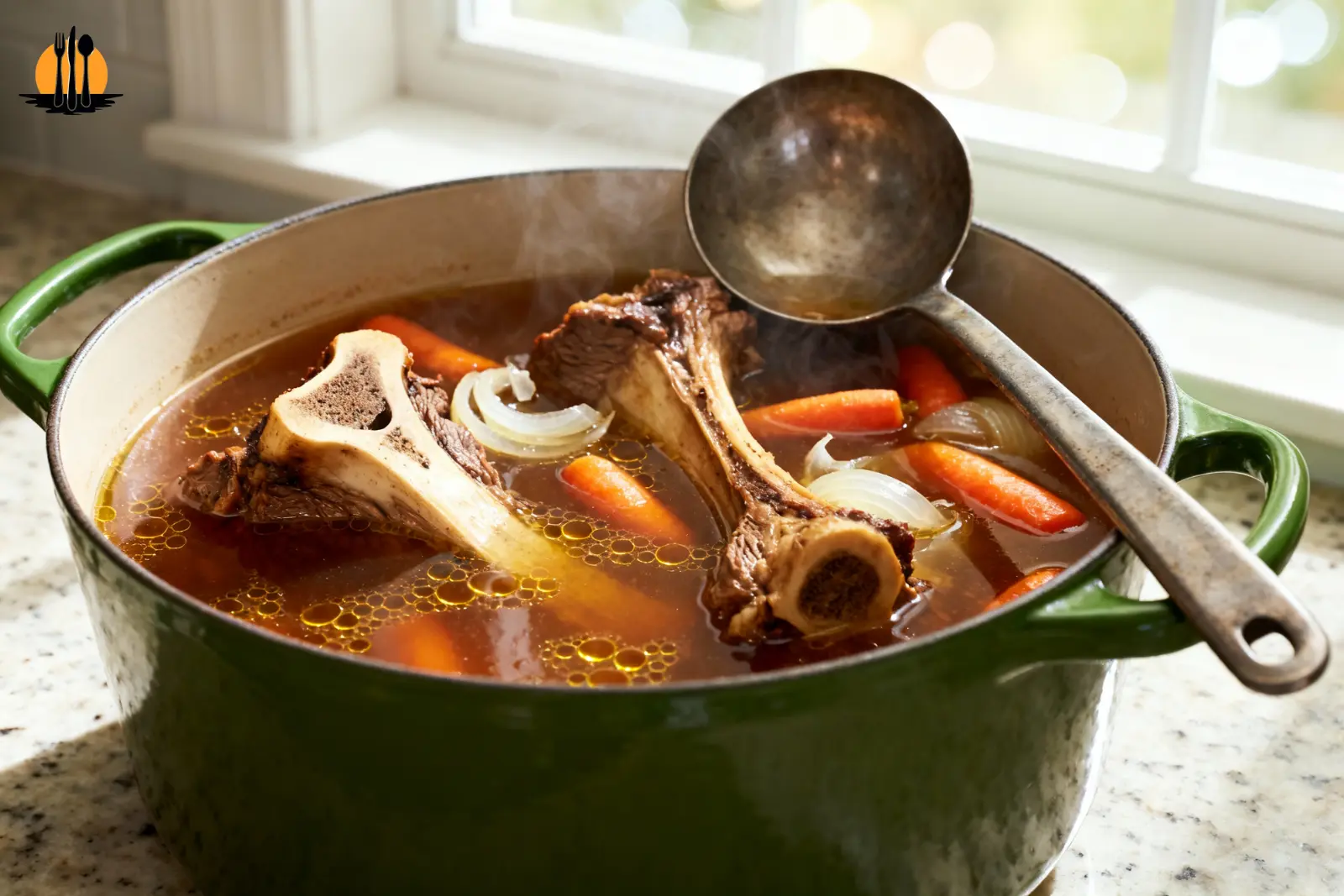
- Skim the Surface: You will see grey foam rising to the top. Use a ladle to skim this off. This “scum” contains impurities that can make your final taste bitter or cloudy.
🌡️ Temperature Guide (The Safety Zone):
- Simmering: Keep between 185°F – 200°F (Just a lazy bubble, never a violent boil).
- Cooling: Must drop below 40°F (4°C) quickly before storing in the fridge.
- Grandpa’s Note: If it jiggles like jelly when cold, you did it right!
Grandpa’s “Low and Slow” Secrets
Once you have skimmed the pot, the hard work is done. Now, you need patience. Keep the heat on the lowest setting. You want to see just one or two small bubbles breaking the surface every few seconds. We call this a “lazy simmer.”
Cover the pot, but leave the lid slightly cracked open. This allows some steam to escape and concentrates the flavor of the beef stock. Let it go for at least 8 to 12 hours. The longer you wait, the better it gets. I often let mine go all day while I work on other things in the garden.
Variations & Methods to Try
The Instant Pot Method (For Busy Days)
I love the smell of a pot simmering all day, but I know life gets busy. If you cannot wait twelve hours, you can use a pressure cooker. It uses high pressure to extract flavor in just about 120 minutes.
Making Instant Pot beef stock is a valid shortcut. You use the exact same ingredients I listed above. Just make sure you do not fill the pot past the max fill line. The result is still gelatinous and delicious, even if the flavor is slightly lighter than the oven-roasted version.
Turning it into Bone Broth
You might hear people talk about bone broth as if it is something new. In reality, it is just stock that has been cooked even longer. If you let my recipe simmer for 24 to 48 hours, the bones will start to crumble when you touch them.
This extended cooking time releases every last gram of minerals. It creates a very intense liquid. While my classic Beef Stock is designed for cooking sauces and soups, this longer version is often drunk straight from a mug for its health benefits.
Chicken or Vegetable Mixes
Do not be afraid to mix your leftovers. In my kitchen, I keep a bag in the freezer for scraps. If I have a roast chicken carcass or some leek tops, I throw them in with the beef bones.
Mixing proteins creates a “household stock” that has a complex, rounded flavor. It is not strictly traditional, but it is delicious. Cooking is about using what you have and making it taste good.
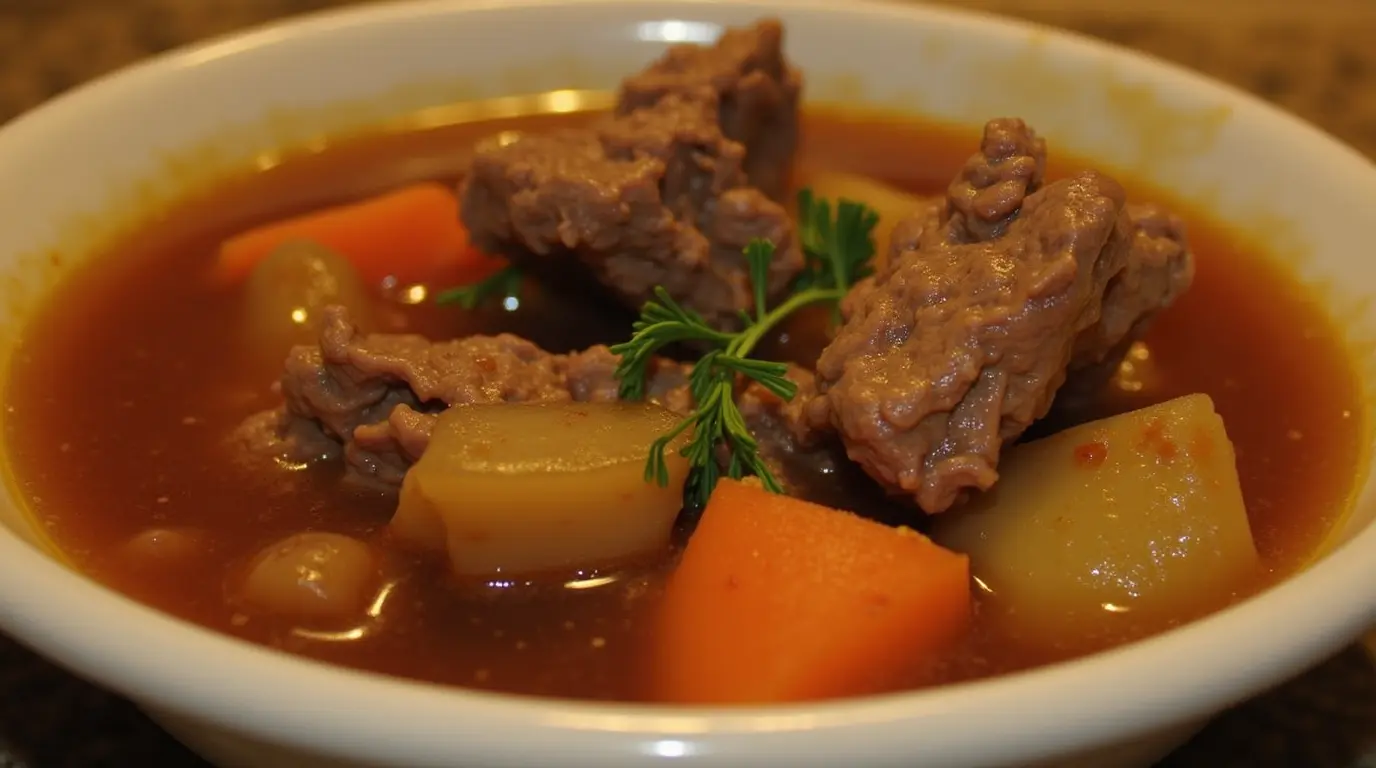
🍽️ How to Use This “Liquid Gold”?
- Soups: The perfect base for a classic French Onion Soup.
- Risotto: Swap water for this stock to get a creamy, restaurant-quality texture.
- Sauces: Reduce it down to make a shiny glaze for your steaks or roasts.
- Drink: Sip it hot in a mug with a pinch of sea salt for a protein-rich recovery drink.
Troubleshooting & Storage
Common Mistakes (Cloudy or Bitter Stock)
Sometimes, things do not go exactly to plan. If your Beef Stock looks milky or cloudy instead of clear, it usually means it boiled too hard. The rapid movement emulsifies the fat into the water. It will still taste fine, but it might feel a bit greasy.
If the taste is bitter, it might be from the vegetables. Burnt onions or old celery leaves can ruin the flavor profile. Also, never leave the stock to cool on the stove overnight with the vegetables still inside. This can cause it to sour or ferment. Always strain it as soon as it is done.
Storing and Freezing Your Liquid Gold
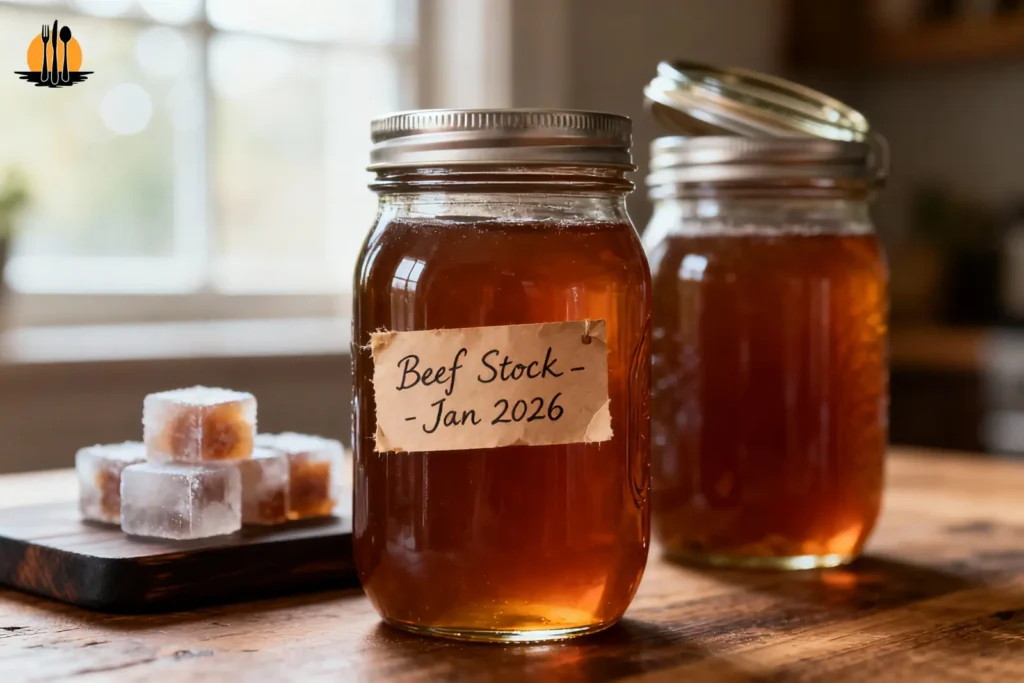
Once strained, let the liquid cool down quickly. In the fridge, it will last for about 3 to 4 days. You will see a layer of white fat form on top as it chills. Do not throw this away! It acts as a natural seal that protects the liquid underneath from bacteria.
If you have made a large batch, the freezer is your best friend. Proper storage prevents freezer burn and preserves that fresh roasted flavor. For a complete guide on the best containers and thawing methods, read my detailed article on how to freeze beef stock. It covers everything from glass jars to ice cube trays.
Grandpa Chef’s Quick Answers (FAQ)
Is homemade stock healthier than store-bought?
Without a doubt. Store-bought versions are often high in sodium and lack real nutrients. When you make it at home, you control the salt. Plus, the slow cooking process creates a collagen rich beef stock that supports joint and skin health.
Why isn’t my Beef Stock turning into jelly?
If your liquid stays watery in the fridge, you likely used too much water or not enough cartilage. The “jelly” comes from connective tissue dissolving. Next time, add more knuckles or reduce the liquid further to concentrate the gelatin.
Can I leave beef stock simmering overnight?
Yes, you absolutely can. In fact, the best flavor often comes from a 24-hour simmer. Just ensure your stove is on the lowest possible setting and the pot is safe. I often start mine in the evening and wake up to a house smelling like heaven.
What gives beef stock the best deep color?
The dark amber color comes from two steps. First, roasting the bones until they are well-browned creates the base color. Second, leaving the yellow onion skins in the pot acts as a natural dye.
A Final Gift From My Kitchen
Recipes may look alike, but they are never quite the same as when I share them with you. And as a thank you for bringing this story to life in your kitchen today, here is my last secret.
It is about that layer of white fat that forms on top when your stock cools down. Many people skim it and throw it in the trash, but that is a huge mistake! We call that “Pure Beef Tallow.”
Scrape it off and keep it in a small jar in your fridge. The next time you roast potatoes or sauté mushrooms, use a spoonful of this instead of oil. It adds a savory, meaty richness that butter simply cannot mimic. It is this final touch that turns a simple side dish into a memory.
Now, it is truly ready. From my kitchen to yours, happy cooking.

Beef Stock Recipes | for Deep Bold Flavor
Ingredients
Method
- Roast the Bones: Preheat your oven to 400°F (200°C). Rub the bones with olive oil and tomato paste. Roast them for 45 minutes until they are dark brown. This is the main difference between Roasted beef stock vs raw preparations; the roasting creates the deep flavor we want.
- Deglaze the Pan: Move the bones to your large stockpot. Pour a little hot water onto the roasting tray and scrape up the brown bits stuck to the bottom. Pour this liquid into the pot. Do not waste a drop.
- Add Cold Water: Add your vegetables, herbs, and vinegar. Cover everything with cold water.
- The First Boil: Bring the pot to a boil on high heat. As soon as it bubbles, turn it down immediately.
- Skim the Surface: You will see grey foam rising to the top. Use a ladle to skim this off. This “scum” contains impurities that can make your final taste bitter or cloudy.